
Tips for Traveling with ADD/ADHD

Road Trip 2014


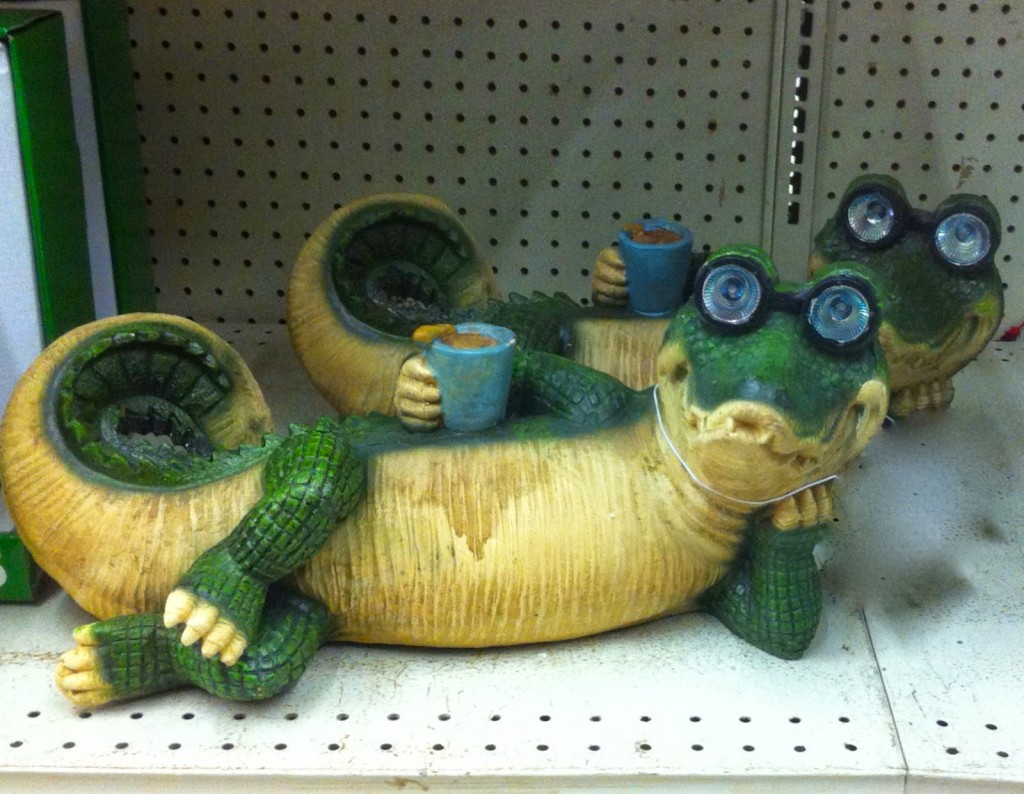
Traveling with ADD/ADHD feels like this.

 

Traveling means a change in routine. Change combined with sensory overload is a recipe for major distraction issues, anger management issues, and overwhelm. I love to visit new places and experience new things, but getting there is stressful. It was bad enough when I just had to worry about getting myself from point A to point B but with kids it is complicated.

Instead of just my own needs, I need to worry about two other people getting where they need to go, safely, and to have fun on the way. It is one thing to get lost, miss a flight, or forget items of clothing, when it is just you, it is very problematic with kids.
These are the things that we do at our house to make it easier when we travel by car, and when we take plane trips.

 1. DO NOT PROCRASTINATE! Sorry to be so shouty but if you don’t follow any of the other tips, please embrace this one. The sooner you get your tickets, plan your route, pack your bags, put in your mail hold, and make reservations, the less chance you have of screwing everything up beyond repair.
2. Set reminders in your phone or on your computer to remind you to do the things in number 1.
3. Take time to make a plan, using Who, Where, When, What and How for your trip. Think of this as an outline, not etched in stone.
4. Make a packing list. If your want to get fancy you could make a permanent one that you laminate and write on with dry erase markers.  If you travel a lot a permanent list that lives in your suitcase is helpful.
5. Make kids responsible for their own entertainment bag/carry on. Young children will need guidance, older kids should be told they are on their own, and that they will have to be responsible for carrying it and keeping track of what they bring. The rule for older kids is you have to be able to pick it up and run with it, in case we have to try to catch a connecting flight.
6. If you or family members take medications be sure pack enough for several days in your carry-on luggage in case your bags are lost.
7. I can not travel without music. It helps me relax and keeps me from being overwhelmed and aggravated by the noises on a flight. Although the last several flights I have been on have been really quiet. Thank you smart phones and tablets.
8. Pack healthy snacks and lunches. When we travel by car we always pack a picnic lunch. This saves money, time, and we are not forced to eat crappy fast food. This is more difficult traveling by air. On long flights, we pack healthy snacks, and sandwiches that do not need refrigeration.
9. Pack earplugs or noise canceling headphones for flights. Most ADD/ADHD people have sensory issues, and a plane flight is very difficult as we can’t move about, and we are overstimulated by all the people energy, and noise around us. If your kids have ADD/ADHD, find kid sized headphones for them. Understand that travel is hard on kids without sensory issues, it is magnified in kids with sensory issues.
10. Be understanding of yourself. If keeping track of the tickets is stressful and you have another adult or responsible older child with you, let them keep track of the tickets.
11. Breathe. Focus on the fun you will have when you finally get where you are going. Remember if it gets crazy it will make a great story later.
Peace and safe travels.
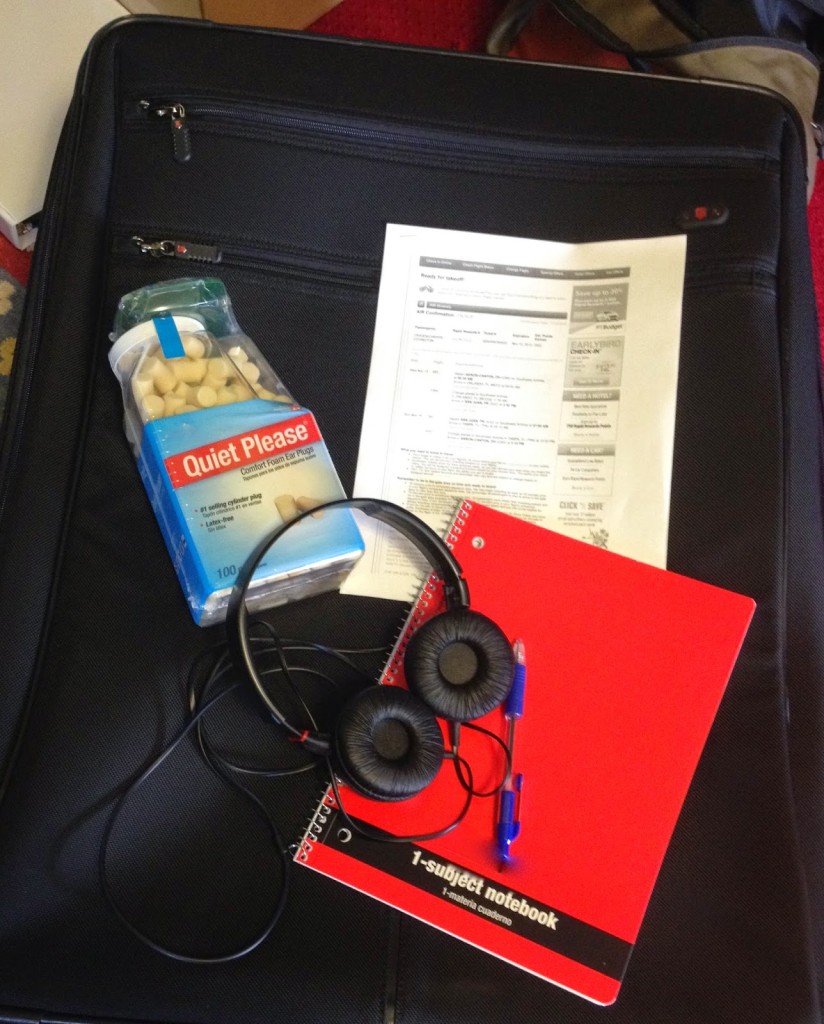
Why yes,  that is a giant bottle of ear plugs.


Zoë Kessler ADHD Accoding to Zoë _ A Year of Women’s Voices

Zoë Kessler’s book ADHD According to Zoë : The Real Deal on Relationships, Finding Your Focus & Finding Your Keys (2013) is the first book I recommend to women with ADHD.

Ms. Kessler’s book offers suggestions for the issues that ADHD folks deal with everyday, and she does it with humor and honesty. Her poignant stories and examples of the effects that ADHD has had on her life left me laughing, and a little teary remembering some examples from my own life. She effectively articulates the belief that many individuals with ADHD have: everyone else must know some grand secret way to keep it all together AND remember where they put it.
Ms. Kessler’s book differs in her honest approach to how ADHD affects social relationships and sexuality, a topic that most books address fleetingly or not at all.  Ms. Kessler’s suggestions and tips are truly helpful. The solutions presented are things that folks with ADHD would able to accomplish, not some solution dreamed up by someone who has no idea what it is like to be wired 24/7/365 with a short attention span, unless we are hyper-focused.  Ms. Kessler’s warmth and genuine desire to help comes through in her writing. Reading this book is like having a conversation with a close understanding friend.
Ms. Keller also examines and addresses the stress that comes from being a woman with ADHD and the social construct that women are the center of the family, able to take care of everyone and everything else in addition to themselves, addictions, disorganization and time management,  sexuality, social issues, impulsiveness, the need to move, financial issues, creativity, and overwhelm. She encourages women to embrace their differences and find ways to work with who they are, instead of trying to force themselves to become the imagined perfection of everyone else.
Her message of hope that everyone diagnosed with ADHD treat themselves “with the respect, kindness and love that you deserve” is a welcome one.  If you only have one book on your shelf that deals with ADHD make it this one.
As a writer and fellow club member this is what I have learned reading  Zoë Kessler’s book and her very helpful blog ADHD from A to Zoe


1.  Tell your story honestly.
2.  Humor makes it easier to talk about difficult topics.
3.  Real life examples are an effective way to tell your story.
4.  It is possible to make writing about self-help FUNNY and helpful.
5.  Embrace you unconventional self, let it show in your writing.
Here a short bio and contact information for Ms. Kessler.
Zoë Kessler (http://www.zoekessler.com) is a best-selling author, journalist, and motivational speaker who specializes in topics relating to adult Attention Deficit Hyperactivity Disorder (ADHD / ADD).
A top blogger at Psych Central.com, Kessler‘s blog, ADHD from A to Zoë has garnered a loyal readership from around the globe. Kessler also blogs for The Huffington Post, and is a frequent contributor to ADDitude Magazine. She’s created radio documentary and standup comedy about being a woman living with ADHD. Zoë’s been interviewed on international radio, and has been featured in print media, documentaries, and books on the topic of women and ADHD, including Scientific American Mind Magazine.
Kessler’s most recent book, ADHD According to Zoë: The Real Deal on Relationships, Finding Your Focus, and Finding Your Keys has been described as a must-read, spellbinding portrayal of a woman with ADHD.

Holiday Hell or How to Survive the Holidays with ADHD

This is my face when I know that we are heading into the holidays. I am happy but cautious. I know that for me and folks like me the normal everyday distractions that cause us to wander off into our own little world multiply like rabbits gone wild.


 Many Christmas mornings I have felt like this, off center and out of focus,
 after having indulged in things like this,


and this.


I love the holidays, but I am easily overwhelmed by the lights, shiny objects, people, and activities that go with the holidays. Parties, gift buying, gift wrapping, kids off from school, travel, big family dinners, New Years celebrations are great and horrible at the same time. I loose track of everything, my routines are interrupted, and I get very little done. For many years it would take me until February to get back to center. Here are my top ten survival strategies to make the holidays less overwhelming

1. Plan some time each day to just sit. Even if it is just ten minutes, set a timer and forget about everything, let your brain and adrenal glands rest.
2. Limit or no alcohol.  I know it sounds harsh, and I know it is the season to be merry, but too much merry makes for a rough day the next day. ADHD folks often have issues with substance abuse, and the holidays make it so easy to over indulge. We like to quiet the noise in our heads with libations. Be honest with yourself about this.
3. SET A BUDGET for gifts, entertaining, and decorations. Really. Managing money is tough for folks with ADHD.  Impulsive spending feels good, and combined with the distractions of the season can cause debt to balloon to epic proportions. Do it. You will be grateful when you are not still paying for the holidays in July of 2018
4. Say No. You can do it. Say NO to those events, and situations that have caused you stress in the past. This will be impossible if it involves family. In family situations, if your really feel that you have to participate, set time limits. If you know that certain family members become total nut-cakes, and act out after a few glasses of eggnog, leave before it happens.  If this is you, see tip #2. Remember, their drama does not have to be your drama.
5. As hard as it is, keep up with your exercise routine. Be creative if you are traveling. Go for a walk, ride your bike, heck even shoveling snow is great exercise.  For folks with ADHD, some sort of movement each day is essential self care.
6. Eat well. Have some holiday treats but beware of the stress-eat sugar-max out my caffeine-screw it because it is the holidays trap. Loading your body with stimulants only exacerbates your impulsiveness and makes you do crazy things.
7. Avoid busy shopping times. I pretty much stay away from big box and chain retail stores from November until the middle of January. I shop local. Small stores are great, less overwhelming and have fewer choices. I also like supporting my neighbors and small businesses.
8. Go back and read this post about getting better sleep .  Really.
9. If other family members have ADHD remember that they are struggling too. Help your kids by modeling coping skills for sensory overload and situational overwhelm. Remind them that they can take breaks when ever they need to calm down. Help them moderate their sugar intake. Be aware that the stress of the holidays can make kids with no issues act out, ADD/ADHD just stacks the deck.
10. Enjoy yourself. Do what you need to do for your own self-care and your family’s well-being. If folks judge you for that, that is their problem, don’t let it be yours.

I hope these tips help.

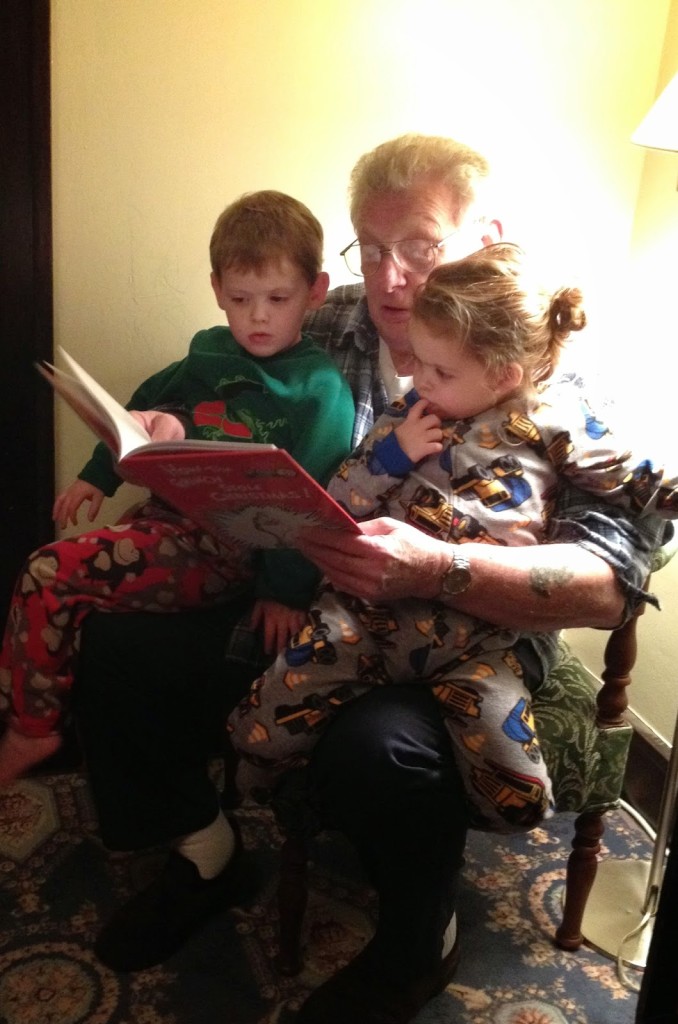
My daughter trying to make the Grinch feel better.

My smirk, perpetuated by my son…

The Love of Reading


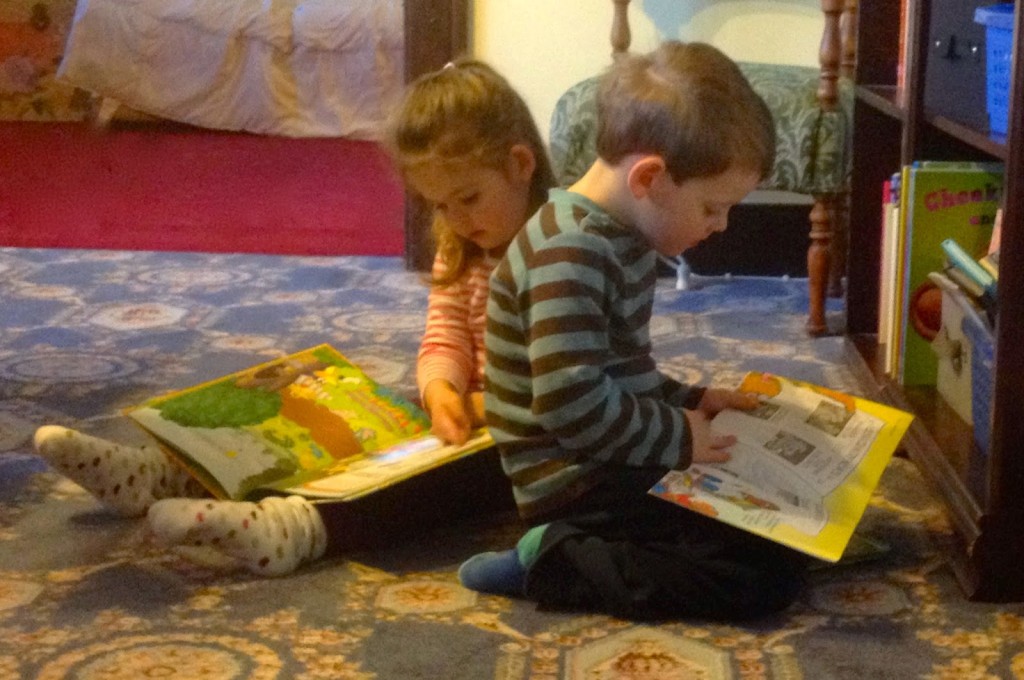
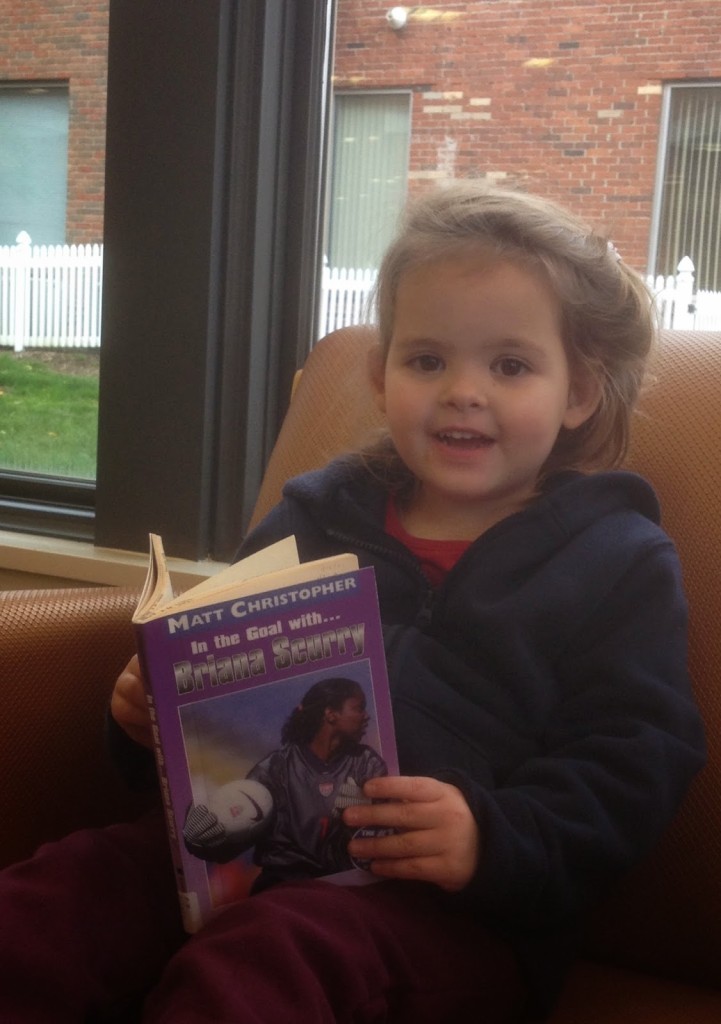
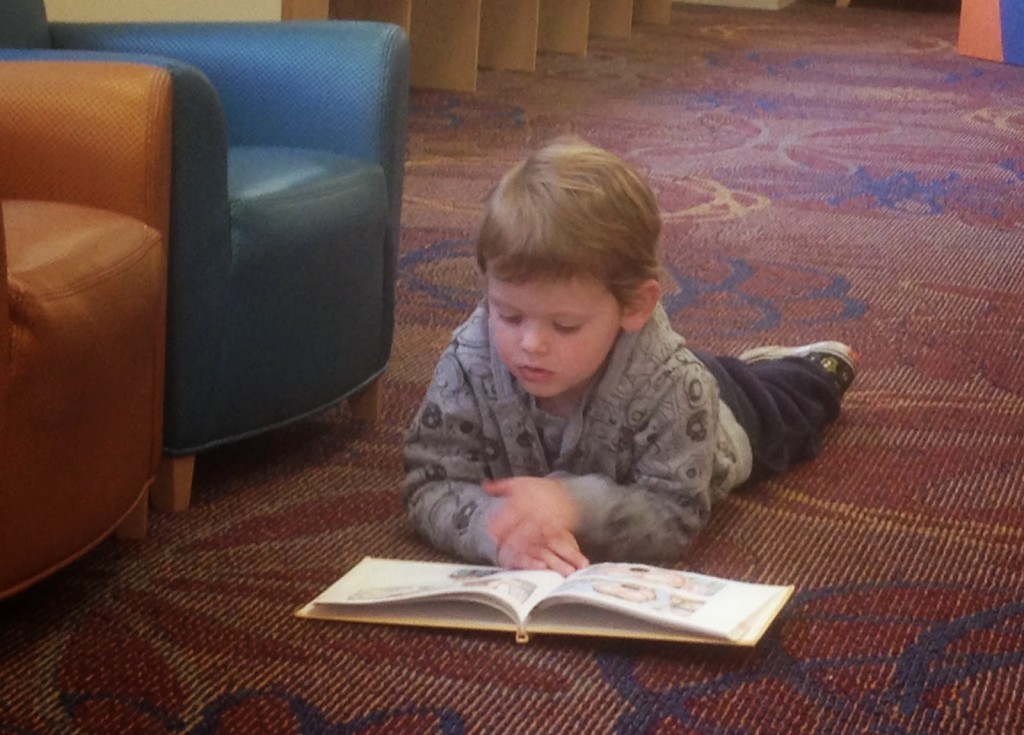
My kids love books. They are happy when we read together. They are not able to read on their own yet, but they make up stories looking at the pictures and remembering. They are very good about asking what a word means when I read a word they don’t know to them. To them the library is a magical place. When we come home from the library with our big bag of books, they spill them out across the floor and spend at least an hour looking at them.
 I hope that they remain as excited about books for the rest of their lives. Books have been my constant companions since I could read. I have never minded waiting, nor being left alone, as long as I had a book to read.
Parents sometimes stress about what legacy they will leave their children. As the daughter of two readers, I know that a love of reading is the most wonderful gift my parents could have ever given me.


I intend to pass the legacy on.

The Siren Call of NaNoWriMo


October is the lead up to the annual craziness that is National Novel Writing Month (NaNoWriMo). For those not familiar with NaNoWriMo, the goal is to write a 50,000 word novel starting November 1 and ending November 30.  I completed NaNoWriMo last year and it was so much fun that I am finding it hard to resist this year.

Why would anyone set a goal of writing 50,000 words in a month? For me, it was just to see if I could do it. I have no problem coming up with stories, my problem was not putting writing first.

So many other things in our lives compete for out attention: partners, children, work, pets, television, movies, books, sports, Facebook, Twitter, Instagram, etc. What NaNoWriMo did was force me to keep to a schedule. In order to finish I had to make my word goal for the week, no matter what. I learned to let things go, to not stress about anything except getting words on paper during the month of November.

It helped that my partner was traveling for most of the month of November, so I had evenings free after the kids went to sleep. I created an outline and some character sketches, as well as a daily word/weekly word count calendar before the contest started. I was not able to attend any of the local meetings with other participants, but was supported by a robust on-line community, and another friend that was doing NaNoWriMo.

I was asked by a fellow writer “Why? Why do it? What will you get out of it?”
I thought that I would just get the satisfaction of meeting a goal, and having 50,000 words to work with, but I ended up with so much more by completing NaNoWriMo.


I gained freedom.  

I had a fun. Real, honest to goodness fun, writing. I did not edit myself.  I didn’t worry about what anyone would think. I just kept going, and did not look back.

I had not written that freely in years. I remembered how to write fast. Something I had learned writing my master’s thesis and forgotten.

If you are a writer, or think you would like to be, give  NaNoWriMo a shot. If you don’t make your goal, you are the only one who will know. If you finish your novel, you get so much more than just a cool computer badge that says that you did.

NaNoWriMo is a great organization that encourages and supports creative writing for kids and adults. Check out their website  http://nanowrimo.org  and sign up while you are at it. I will be cheering for you.


Flexibility and ADD/ADHD: Why it is hard to shift gears

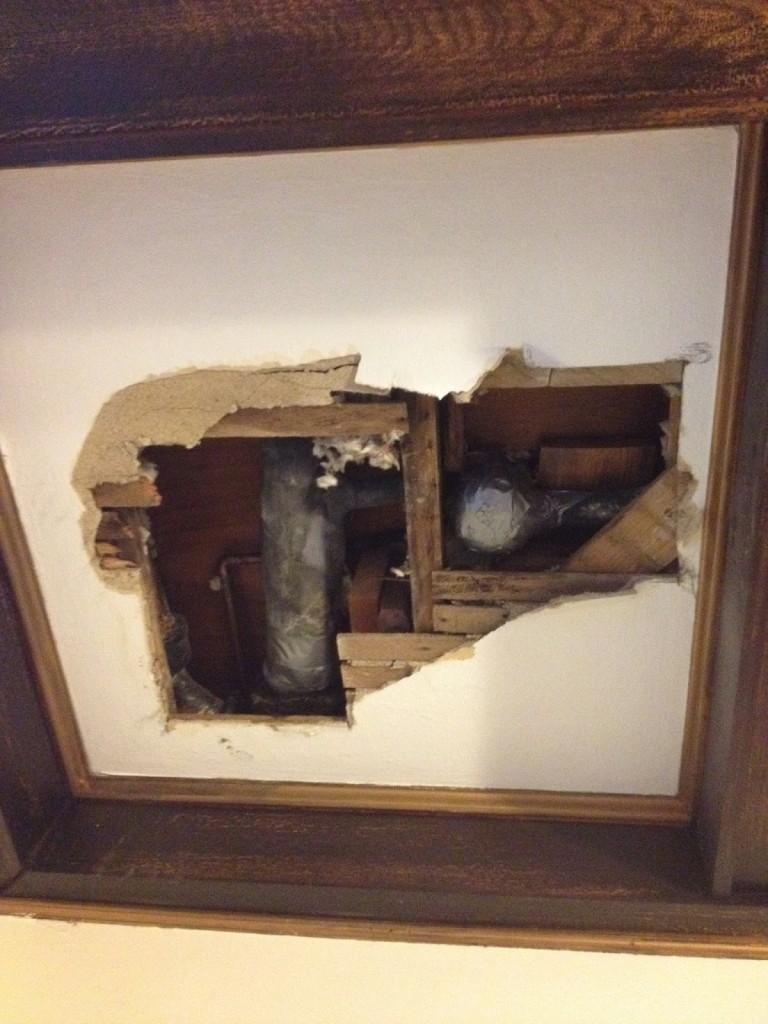
So my driveway has looked like this for the last three weeks. Yes, that is my backyard on the other side and the only way to get to it is to walk around the block to the back gate. The second week of driveway repair, my tub leaked into the ceiling, which then looked like this,

and the plumber couldn’t get back to fix it for a week.

That being said, I have had better luck trying to replace our windows. The windows in our property have needed replacing for some time now. As windows get older they can often get damaged by bad weather and this can cause them to let in a draft. Over time this can actually have an impact on your utility bills as you end up having to use more energy than necessary to keep your home warm.

Anyway, a friend of ours who lives in Missouri told me that she managed to find an amazing window replacement company online by searching for ‘replacement windows kansas city‘. We all search for things online nowadays, so if ever you need a home renovation expert to take care of any remodeling work on your property, doing some research online and comparing your options can help you to find the best possible contractor at the most affordable price for your budget.

Ultimately, I was able to find a great window company in our area and they have promised to visit us at some point over the next couple of weeks.

So what has all this got to do with flexibility?

For folks with ADD/ADHD we struggle to find our equilibrium when our routines are disrupted. I have misplaced my keys three times in one day, because my driveway is still under construction, and we can’t use our normal route in and out of the house. Where do I hang my coat and keys? Where are we going to keep the leashes, shoes, coats, bags, and everything else we have organized to make getting out of the house easier?

Most people can adapt and adjust to a disruption of their routines pretty quickly. ADD/ADHD folks find it much harder to adjust. It often takes us a very long time to find a routine that enables us to accomplish our goals. We seem inflexible because any disruption of our routine makes it that much harder for us to get out of the door and accomplish anything because we feel frustrated, confused, and angry at the disruption.
We can’t let go of our routines, and we can’t let go of our desire to return to what was working. We sabotage ourselves so often, that when our routine is disrupted from the outside, we freak out, call it a wash, act out, and get nothing done.

Here are my five tips for coping when an event disrupts your routine.

1. If your normal staging area is blocked (your landing/take off pad), take the time to establish a new one. You will waste less time in the long run.
2. Forget about keeping all of your routines in place. Breathe. Decide what is most important. Enlist help from other people if you need help with sorting important tasks from unimportant tasks.
3. Understand that home improvement projects are unpredictable. Estimated completion times are just that, an estimate.
4. Remember to eat well. Do not fall into the uber-caffeinated/ junk food/ drink a lot/ screw all my good intentions/ I’m stressed out because my house is broken, excuse.
5. If you work at home, try and stick to your office routine. If you can not work because the noise of the project is disruptive, or watching the large equipment is hypnotic, find another site to work. Libraries often have study rooms you can use during school hours. I call the local library my branch office.
6. Do not start any new projects, even if you really, really want to because of the stress.
7. Remember renovation/ home improvement projects are hard on other family members, including pets. Work together to figure out what works for everyone.

I hope these tips help. Remember if it all is too much, you can always watch the heavy equipment.


Reminding Myself to Slow Down

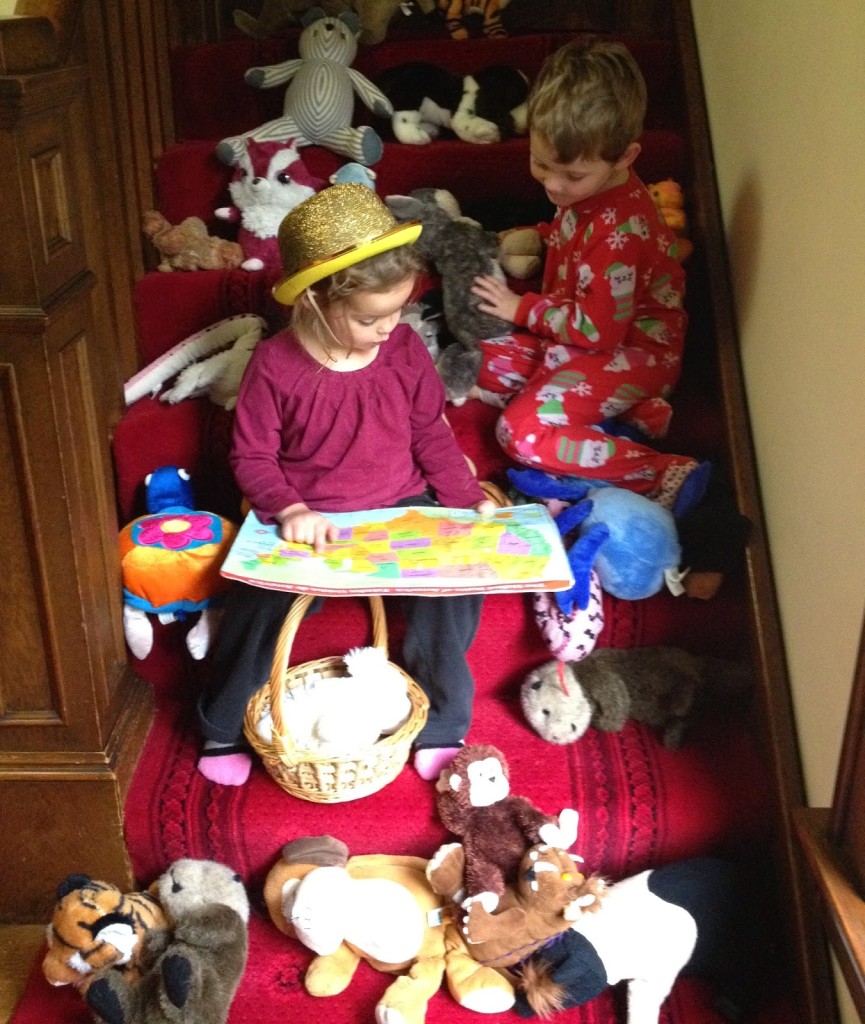
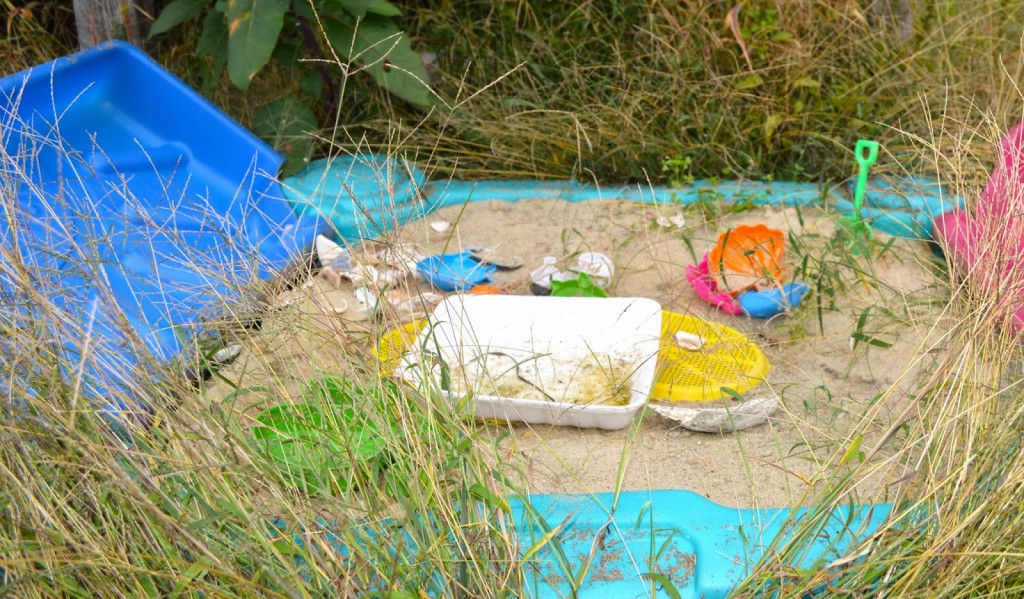
Many of my friends posted pictures of their kids going to Homecoming dances this week, and my oldest had a birthday last week and just started a new job that involved a move.  I was reminded that life occasionally feels like you have been shot out of a cannon, and as my oldest friend used to add “without a net”! I know my kids will not always be happy having imaginary train trips on the stairs with all their animal friends. I know that soon the sand box at my mom’s will look like this:


And I know that I will look back at the time and wonder where the hell it went.
ADHD people often live life in a blur, we have a great time but sometimes in our rush to get to the next thing we forget to stop, and soak up life,  we are distracted.  Being distracted and busy can interfere with all of our relationships. Establishing respectful communication and listening skills are lessons kids learn best by practice and modeling.
I know if I want my kids to learn how to listen and focus, I need to stop and focus on them when they talk, to really listen, and ask questions if I don’t understand what they are trying to tell me. It is sometimes a struggle when I feel like I need/want to do fifty other things, besides stoping to read a book we have already read a least a hundred times, or listen to them telling me about an event at school.

My goal for myself is to slow down,  remembering to appreciate this time, when boo-boos can still be healed with a kiss. Exploring, getting your hands dirty, and playing are what life is.  I will take the time to do the little things, to ride a magic carpet made of cardboard, to sit in the playhouse and read books, and to stop and dig in the dirt with my kids if that is what they want to do. I can pretend it is for them, but really, it is for me.

When People Don’t Get It: Tips for Parents and Children with ADD/ADHD

This is my face whenever someone makes comments such as: “ADD/ADHD doesn’t exist, you know we are all a little ADD”.  Most of the time these are well meaning people, trying to make me, or someone whose child has been diagnosed with ADD/ADHD feel better. Let us just be clear. It does exist.

If you have it, you know you do not think like everyone else. You know that most individuals learn to control their impulsive behavior by the time they are adults. You know that everyone does not have a brain that highlights and underlines every single thought and piece of information that it encounters.  If you are hyperactive, you know that what you do in an average day would exhaust someone without your energy. You know that hyper-focus can be your best friend or worst enemy.

Everyone may feel like they are distracted and can’t keep it together at times. Some people are forgetful, or they might even feel like they can’t sit still occasionally. This is not the same as the compulsion to move that accompanies hyperactivity, nor is it the brain that refuses to shut down so your body can sleep.

It is also not the feeling that you have, as a kid, when it seems like everyone else has some secret knowledge that enables them to turn assignments in on time, write neatly, and accomplish tasks in an orderly, timely fashion.

 As a child, even with the best of intentions, I struggled with behavior and focus in the classroom.  I grew up before medication. I can remember overhearing other parents telling my parents that what I needed a was “firm hand” and to learn self-discipline. More than one of my teachers labeled me lazy and unmotivated.

What saved me was a mom that understood that I needed to move, that I needed an outlet for my energy and creativity, and that I needed help with organization.  My mom made sure that I had space to run, a garage for my experiments, and tools and supplies for my creative pursuits. She encouraged me, and always told me I was smart. I am grateful that my mom figured out that I needed help with learning how to manage my time and organization. She was always willing to try new things to help me succeed. She never made me feel that school was about my grades. She wanted me to understand that working hard and learning were what was most important in life.

If you have a child that struggles with organization, procrastination, and focus, with a diagnosis of ADD/ADHD, or without, please remember: no one willfully fails. These are my tips for working with kids that are struggling with focus, procrastination, and organization. If you are a parent who has ADD/ADHD implementing these tips may be difficult, do the best you can. There are links at the end of this post to organizations and websites that provide more information and support.

1. If your child has been diagnosed with ADD/ADHD, accept it. Educate yourself. If you suspect that you may also have ADD/ADHD get tested. Many successful and creative people have ADD/ADHD. When I say accept it, I am not saying that you will not have grief and sadness. Feel your feelings, but do not let them paralyze you. Your child needs to know that you love them, and that they may need to work harder than their peers, but that they can succeed.

2. Do not rely on medication alone to help your child. Medication is only part of ADD/ADHD management. Eating well, getting adequate sleep, designing and implementing individual education plans, healthy routines and habits are integral parts of the management plan.

3. Plan, Plan, and Plan some more. You have to have a plan for the day. Get your child to assist in the planning. Write your plan down, post it where your child can see it if they get off track. Instead of squelching spontaneity, having and implementing a plan will create time for your child to work on their own projects and creative pursuits.

4. Allow your child the space to explore their own interests. Creative acts are an important part of self-care. Many ADD/ADHD individuals are very creative and need an outlet for their creativity. I wrote a post about self-care and creativity (here). Working on their own projects can be used as motivation to complete tasks that are not so fun.

5. Do not waste time feeling guilty, blaming yourself, etc. Love your child. Love yourself.  Life may be more complicated with ADD/ADHD, but you will never be bored!

6. Use timers. Get your kids used to using timers to help them manage their time. I wrote a post (here) that addresses using timers to manage your time and get things done.  Children can learn to use timers to check themselves and gain confidence in their ability to self-manage.

7. Avoid negative, ignorant, and foolish people. You know who they are. The people that want to minimize what it is like to live with a child who has ADD/ADHD.  The people who make you feel like you are an inadequate parent, or that your child just needs discipline. This may be difficult if you are related to them. Limit your interaction with people who are critical of your child, or your parenting skills. Stand up for your child and yourself.

8. Do not give up. If you try something and it does not make things better, than try another method. Expect setbacks but do not give up on your child or yourself. Keep trying.

 Here are some links to organizations that offer tips and support:

http://www.chadd.org

http://www.add.org

http://www.additudemag.com

http://www.ldpride.net/

http://www.drhallowell.com

If you are a parent with ADD/ADHD  and your child has ADD/ADHD it may feel hopeless at times. Don’t give up. It is possible to become more organized and have less drama in your life. Work together with your child. Reach out to other parents and friends who are supportive. Believe in you ability to help your child and yourself.

Thanks Mom, for not giving up.

13 Stories for Halloween

I love to read stories and books that scare me. I crave that anxious, adrenalin fueled feeling of freaking out. The stories that are my favorites are stories that have images, characters, and scenarios that infiltrate your mind and still scare you long after you have read them. As a kid my room was decorated with EC Horror comic pull-outs, and posters of my favorite horror movies and creature features.
In honor of Halloween, here is a list of stories that have stuck with me, and still come unbidden to disturb my days and nights. I hope you find new reads, and old favorites here.

1. “The Birds” by Daphne du Maurier. I read this when I was about ten years-old, and since then have never been able to walk past a gathering of crows without getting freaked. It is still my favorite Hitchcock film. Who can beat Tippi Hedren screaming?!

2. The Exorcist by William Peter Blatty. I read this when I was twelve. It scared the Hell out of me. The movie makes me laugh because the book was so much more scary.

3. Parable of the Sower by Octavia Butler. I wrote my homage to Ms. Butler (here). This story scared and still scares me because it does not seem so far off nor implausible.

4. Jaws by Peter Benchley. I grew up at the beach, and to this day I will not go swimming at night. The book has a great subplot that was left out of the movie. I had the good fortune of seeing the movie on a huge movie screen the summer it debuted, and it still is one of my favorites. If I am ever eaten by a shark, I want to go out like Quint, fighting all the way.

5. It by Stephen King. I have read just about everything the man has written, and this is the one book that gets me. Clowns scared me before I read this book but after reading It ,I just want to punch them on sight.

6. The Haunting of Hill House by Shirley Jackson. The great Shirley Jackson has so many wonderful stories I had a hard time picking my favorite. This book is responsible for some really freaked out running past likely looking houses.

7. Something Wicked this Way Comes by Ray Bradbury. I love carnivals, circuses, and sideshows. This story always comes back to me and makes me a little on edge at fairs and carnivals.

8. Interview with a Vampire by Anne Rice. I stayed up all night reading this, alone, in a ground floor apartment. I finally fell asleep when the sun came up, thinking I might be safe because the vampires where sleeping too.

9. Rosemary’s Baby by Ira Levine. The book is creepier than the movie, for years I looked wild-eyed at neighbors that seemed a little too friendly. Mia Farrow nailed the part of Rosemary in the movie.

10. From Hell by Alan Moore and Eddie Campbell. This graphic novel about Jack the Ripper is not for the squeamish. The haunting images and story-line will keep you up for days. My favorite Jack the Ripper tale.

11. The Doll’s House, Volume 2 of The Sandman series by Neil Gaiman. Neil Gaiman, the man who gets in your head and stays for awhile. Again not for the squeamish, nor those disturbed by stories and images of violence, mayhem, and retribution.

12. Cabal by Clive Barker. The movie Nightbreed was based on this book. A superb blend of horror and fantasy, you will find yourself rooting for the monsters.

13. “I Have No Mouth and I Must Scream” by Harlan Ellison. This short story is a thorn in your brain. It keeps me up at night, in the same way Octavia Butler’s post-apocalyptic novels do. It seems ever so possible.

What stories have kept you up? Please share, I am always looking for a good scary story.


Tips for Coping with a Family Member’s Illness: Trying to be Still when All You Want to do is Run

We all have times in our lives when we have to wait to see how things will work out. We can’t flip to the end of the story to see if our favorite characters make it.

I am in that space right now. My dad is dealing with some health issues. No matter how hard I try I can not bend the space-time continuum to see if everything will be okay, and I get to enjoy my dad for many more years. Life stress can cause anyone to indulge in, or develop unhealthy behaviors.

Stress, for those of us with ADHD can lead to some incredibly destructive behavior. Our normally hyper-charged system goes into overdrive from the extra adrenaline in our systems.We often suffer from raging insomnia, and do wildly impulsive things based on our addictions of choice. We make poor decisions because we are tired. Our struggles to focus are intensified as routines are interrupted by ourselves, or the need to care for others.

We struggle to keep still, to fight our urge to bolt. Our desire to seek the comfort of distraction and movement intensifies. Excess is the hallmark of our lack of coping. We may find ourselves over-eating, over-spending, over-drinking, over-exercising, over-reading (yes, it is possible), starting a new hobby, or deciding that now is the time to start building that addition / greenhouse / remodel a bathroom.

Unable to cope with our discomfort and lack of control, we start every project on our to-do list, creating even more stress. You do get a lot of things done, but you often end up exhausted and more stressed, as well as adding to the stress of those around you.

 This is not my first time at the cancer rodeo, standing in the chute, waiting to see how bad, or short the ride might be. These are five tips for coping when a family member has health issues:

1. Breathe. Stop, and make yourself take ten slow breathes.
2. Sit. Stop, and make yourself sit. Set a timer and take ten minutes to check in with yourself and what you are feeling. If possible sit outside. Spending even just a little time in nature is good for you.
3. Hug. Hug the people around you, hold on tight (not in a creepy way). Remember they are stressed too.
4. Stop starting new things. Finish what needs to be finished.
5. Set a timer for a certain time everyday to stop what you are doing and think about the person you are worried about, pray, meditate, send woo, send love, chant, whatever your spiritual beliefs are just do it. Just doing this one thing consistently kept me grounded through a best friend’s battle with cancer.

I hope these help. They have helped me keep it together when my life felt like it was exploding.