ADHD and Conferences- My Top Ten Survival Tips

Stocking Stuffers for certain friends. You know who you are.

I spent last weekend attending Chicago North- RWA’s Spring Fling 2014.  If you are a fiction writer and ever consider going to a conference, I highly recommend that you mark your calendar for the 2016 conference. The conference was well organized, information packed, and fun.  I saw old friends, made new friends, and won a basket raffle.
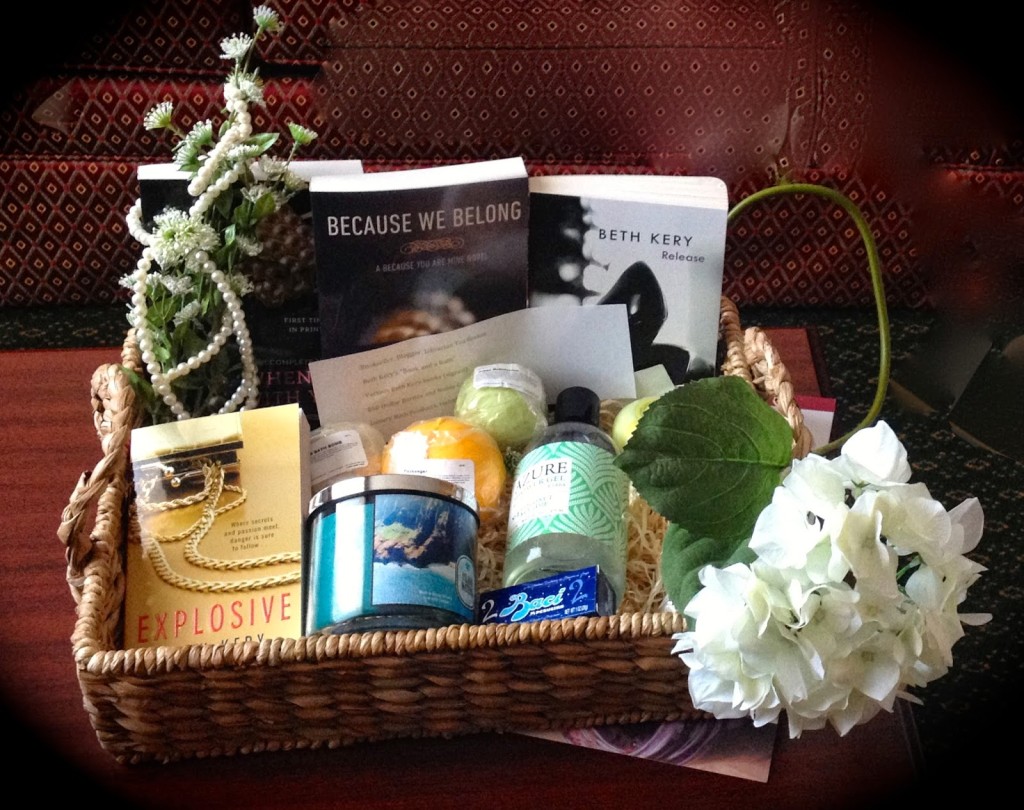
Beth Kery Books and Bath Basket. Beth Kery and her books rock!

 I came home energized, and in possession of new information and ideas that I will be able to incorporate into my writing and my career.  This conference is outstanding for the way it strikes a balance between business of writing sessions, and craft of writing sessions.  As a writer it is so wonderful to be with people who understand the drive and desire to write. They understand your need to write stories about your imaginary friends.  I had the opportunity to meet and interact with successful multi-published authors who could not have been more open, friendly, helpful, and inspiring.

Attending conferences as an individual with ADHD can be overwhelming, like locked in a Christmas Shop kind of overwhelming.  Several factors contribute to this:

1) Adrenalin. A new place with new people, unfamiliar surroundings, and many new things to look
at / do / interact with.

2) Information overload. Attending sessions packed full of information can make your head feel like it is about to explode ala Scanners. ( If you have never seen Scanners, I only recommend it for the exploding heads.)

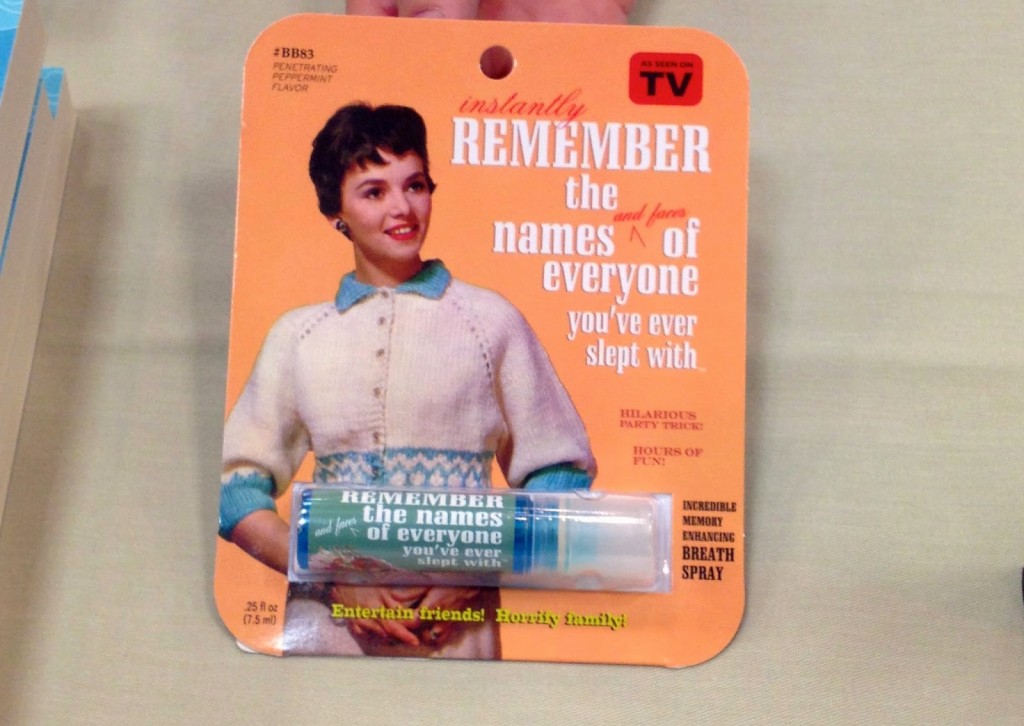
3) People overload. It can be overwhelming to meet new people.  Trying to pay attention/ sort out/ keep track of new faces and names can make your already over-full brain, shut down and refuse to process any more new information. This is why you meet someone, and when you run into them an hour later at a different session you can not remember their name. This is the time to take advantage of the name tags everyone wears!

As a professional I have attended many conferences. Many times I would come home exhausted and frustrated rather than full and energized. My frustration would stem from knowing I had the opportunity to learn valuable information, and the potential to meet really great people, but having been overwhelmed, my brain would shut down. I would come home with a bunch of scribbled notes, and the feeling I had missed something.  Over the years, I have developed a set of strategies that help me enjoy and get the most out of a conference.

Top Ten Tips for Thriving in a Conference Environment.

1) Don’t forget to eat. It is so easy to get caught up  in everything that you forget to eat. Your brain and your body need food.  Make good food choices. It is fine to have some fun eating away from home but do not go crazy eating nothing but sweet sugary treats and drinking your caffeinated beverage of choice. No matter how fun it is. This goes for visits to the bar too.

Pace yourself!

2) Hydrate! Your brain is made up of water, a minor level of dehydration impairs brain function, sugary drinks, sweets, and alcohol all work to dehydrate your brain.

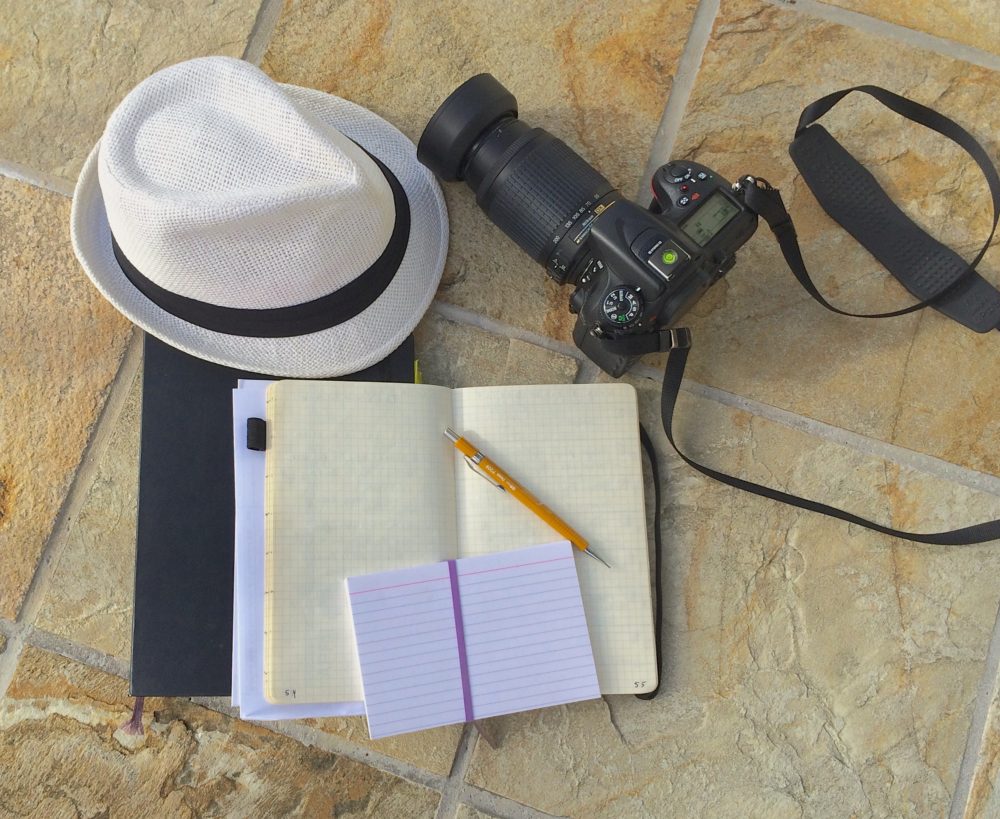
3) Sit up front in panels and presentations. Not having a lot of people around you is less distracting. Take notes, or doodle if the information is preprinted.  Giving your hands something to do will help you retain the information presented.

4) If you take electronic notes I recommend using the Evernote app.  I discuss using the Evernote app in this post (My Brain is Full Post ).   Evernote provides me with something I have never had before, legible, organized notes. It is so easy to let conference notes in a half filled notebook languish in some bottom drawer.  Evernote is an easy way to ensure that your notes are organized, and useful.

5) Plan your day with alternatives.  If you get to a session that is too full, have a back up session or activity planned. I have issues with small spaces and too many people,  so I always have a back up plan.

6) Plan for breaks to walk outside and get some fresh air.  It doesn’t have to be long, but it helps to clear your head and wake up your brain. Being in nature also gives your adrenals a rest.

7) Expect to not sleep.  The combination of a new place, seeing people you only get to see at conferences, and adrenalin surges from the Christmas shop effect will hamper your sleep. Do the best you can. Plan a power nap if you know you are going to be at a late session.

8) Try to take a mental break before bed.  No screens (computer, phone, TV) for at least one hour before bed.

9) Make it a goal to stretch yourself. Meet new people. Try to make at least one new acquaintance.

10) Have fun!  
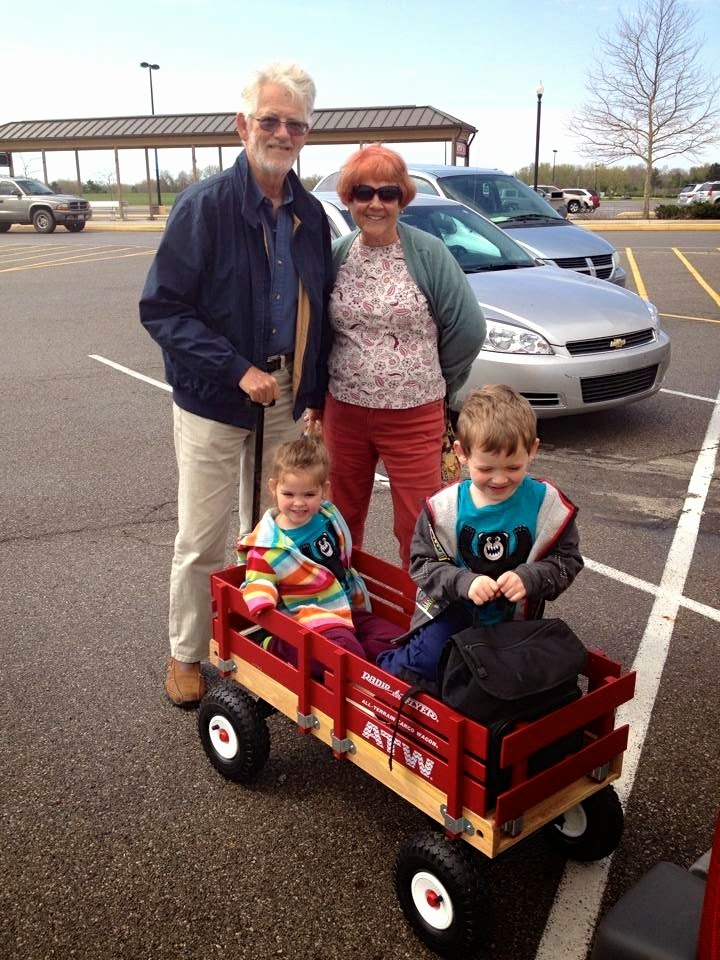
My wonderful in-laws came to help with the kids while I was gone.

                   
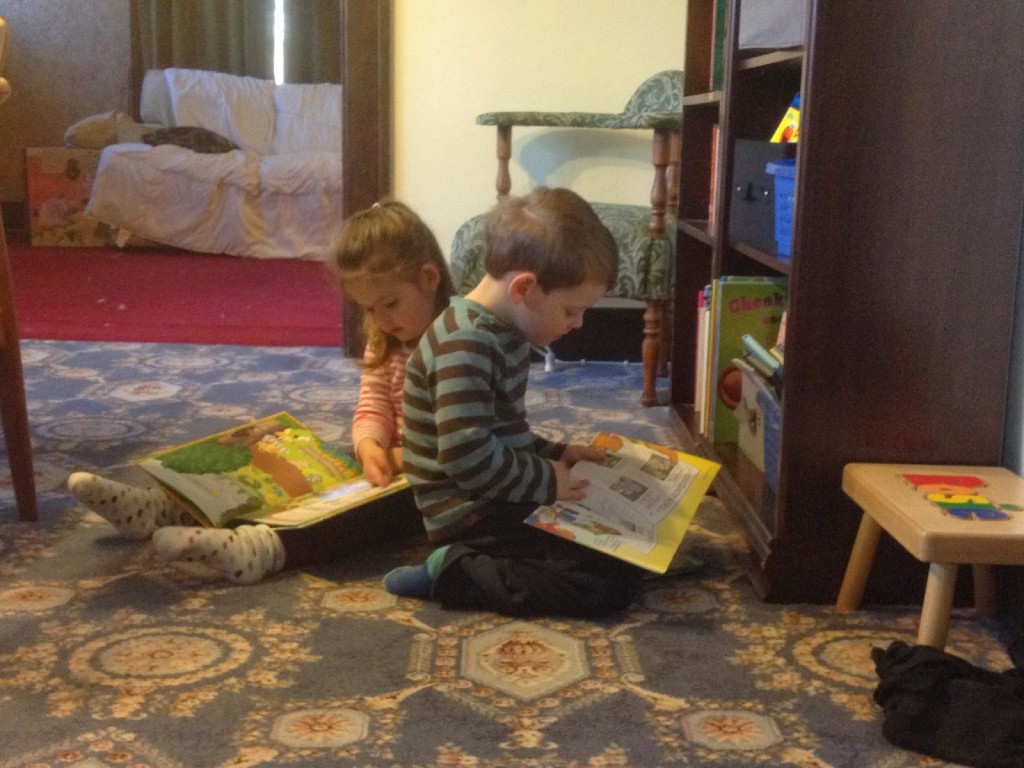
These are just gratuitous pictures of my adorable kids.

Why I love The Bloggess AKA Jenny Lawson


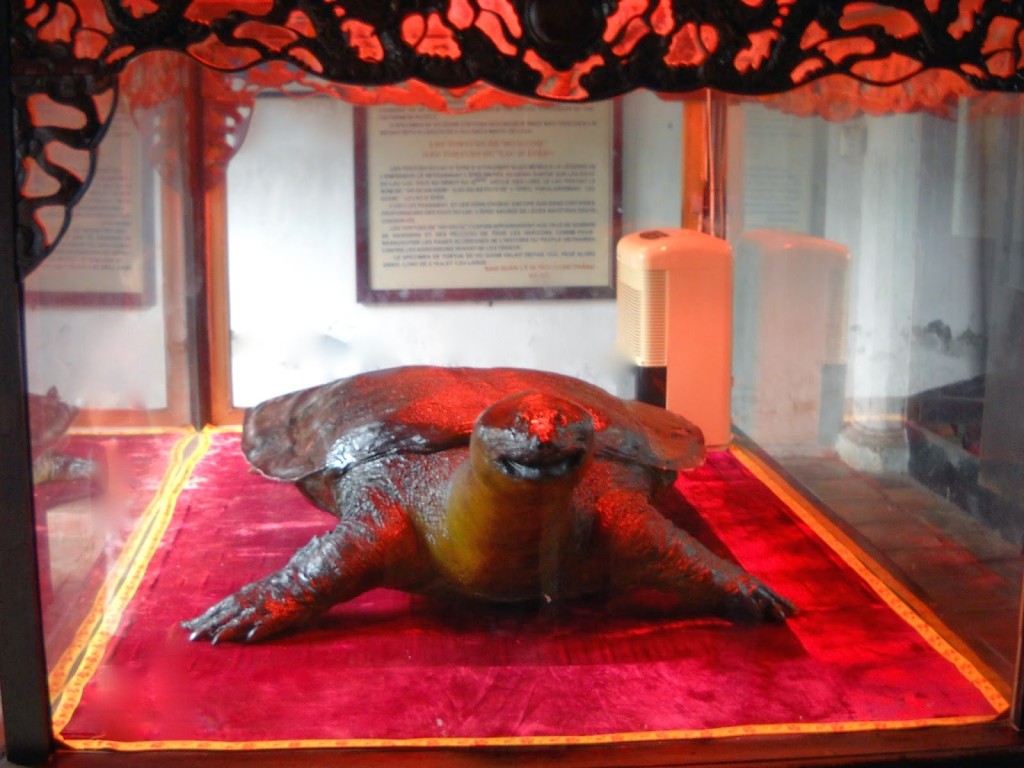
Hanoi Airport, 2009

This is the second installment in the year of Women’s Voices series and the featured voice belongs to Jenny Lawson aka The Bloggess. Her book Let’s Pretend This Never Happened ( A Mostly True Memoir  is funny, heartbreaking and full of weirdness.  Her memoir is an open discussion of her struggles with depression, distraction, and anxiety. I adored her twisted tales of family, love, death, and taxidermy.

As someone who has had my share of weird adventures that are tragic/comic, reading this book felt like I was a sitting in a bar with an old friend. In our family and in my circle of friends, when things are bleak, we always find something to laugh about, even if we end up crying at the same time. This book is like that. Be warned, some might find her humor and style offensive. If you are at all freaked out by discussions of taxidermy, this is not the book for you.  If you want to sample her writing style before committing to the book, check out her blog here  thebloggess.com .

As a writer, the lessons of story and craft that I gleaned from this book are:

  1.  Be honest, except when an exaggeration will make better copy.
  2. Swearing is okay if done artfully, and she is a freaking Picasso with curse words. For those of you who know me: she swears more than I do, which is saying a lot!
  3. Do not be afraid to talk about the hard things, for example: exhuming dead pets, losing a baby, and taxidermy puppets.
  4. No matter how weird it gets, it can get weirder, and funnier.
  5. Truth can be funnier than fiction.
As a fiction writer I don’t have any plans to write a memoir, but after reading Let’s Pretend This Never Happened: (A Mostly True Memoir),  I know that if I did, I would strive to be as funny and as honest as Jenny Lawson.
2014

Timers-Not just for Cooking

Throw back Timer

Looking back over my posts on how to get things done when you have distraction issues, I talk a lot about using timers. I did not grow up in a home where kitchen timers were used. My mom never used one. I can’t smell the aroma of burnt rice, and not think of my mom. I am not sure when I figured out that the smoke alarm was a poor excuse for a kitchen timer.  I will tell you this: using timers when cooking transformed my kitchen skills.

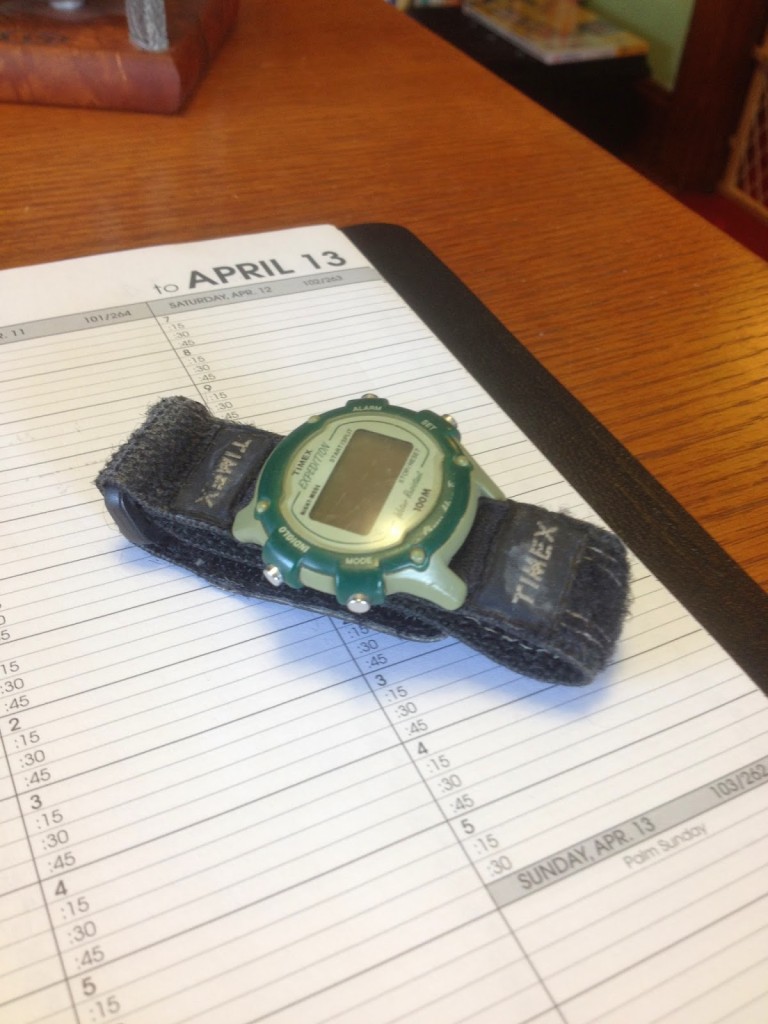
 For years I used the alarm settings on my digital watch, now I use the timer on my phone because it is loud enough I can hear it over the usual pre-schooler chaos in my house.  A timer does not serve you if you can not hear it.  An added feature of using my phone is the ability to set multiple alarms.

ADD-Friendly Ways to Organize Your Life by J. Kolberg and K. Nadeau (Buy the book here)  has a very good explanation of how using timers assists ADD/ADHD individuals with time/life management. I found this book at a time when I was really struggling with keeping things together, and it remains one of the most helpful books I have ever read.  My copy is well-worn and tabbed. These are some of the ways I learned to use timers and alarms to overcome my distraction issues.

 Cooking. This is the most obvious, and common use for timers.  When I don’t use my phone, I have a kitchen timer that has a clip so you can clip it to your clothes, and take it with you.This is very helpful for those of us who decide in the middle of fixing dinner that some household project needs to be started/finished, etc.  I am really partial to the digital ones that count down from when the alarm goes off so if you can’t get to the oven at the precise moment things are done you know how long it has been since you missed the alarm.

Laundry.  I  use a timer when doing laundry, and this cuts down on the “Damn- how long has this load of laundry been in here?!” factor, and rewashing clothes because you got distracted while doing the laundry. It also keeps the laundry moving, taking advantage of the residual heat in the dryer.

Writing. I use a timer when I do sprints, challenging myself to write 1000 words in one hour,  and when I am breaking up my writing time by devoting set times to different works-in-progress. I also set an alarm to remind me to pick up the kids. This lets me focus on my writing and not worry that I am going to be late picking them up from school. When you only have 2.45 hours of kid-free writing time you have to make every second count.

Cleaning up with the kids. We set the timer and play beat the clock, racing around trying to see who can pick up the most toys. It makes picking up the toys more fun, although it can get pretty competitive and sometimes we have to stop to break up the melee that results.

 Any task that I really do not want to do.  I set the timer for ten minutes and give myself permission to quit after ten minutes if I want to do something else. Most often, I get over myself and just finish the dang thing because I want to get it over with after I started it.

Exercise. I set the timer when I exercise so that I can focus on the exercise itself.  There are some great exercise program apps that have timers built in. Using a timer instead of counting reps for exercises allows you to work at your own pace, and tailor the workout to your fitness level. These programs also are body weight programs and do not require equipment. My favorite apps are The Seven Minute Workout (free) ,  and YAYOG ( You Are Your Own Gym- $).

There are many timers on the market for people with ADD/ADHD.  For children, these are wearable timers that look, and function like a digital watch, with the added benefit of vibration so the alarm can be discreet, and kids can wear them to school. The Watchminder is also marketed to adults/seniors. Using timers with kids can decrease the parent nag/kid resist behavior loop.

 Wearable timers designed for use by adults/kids have the ability to set multiple alarms, some also function as count-down timers, and stop watches.  These timers are great to use with kids too young to use phones, non-smart phone users, kids/adults whose phones are a distraction, and kids/adults that work in environments that do not allow cell phones.

Using timers with kids with distraction issues, organizational issues, or  ADD/ADHD is a great way to help them focus, learn to monitor their own behavior, and teach them ways to overcome their distraction issues.  Learning self-management is a great self-esteem booster for kids. For parents, using timers with kids decreases parent stress by letting kids take responsibility for their behavior.

Learning to use timers changed my life in very positive ways.  Timers decrease stress in my life. If you haven’t tried using timers, experiment with them. See if they make a difference for you.

Geeky but functional.

Irregular schedules and Ten Time Management Tips

OH Yeah I OWN it! (Much to my wife’s dismay.)

Time. The most difficult thing in the world to get a handle on if you have an irregular schedule. Add in distraction issues, and you have a wonderful recipe for always being “a day late and a dollar short” as my mom often says.

 I have had an irregular schedule for most of my adult life. I have worked all three shifts at one time or another, worked 8 hour shifts, 10 hour shifts, 12 hour shifts, and everything in-between. I have gone to work on days when I was not scheduled, and not showed up when I was scheduled.  I have missed events, been early for events, and scrambled to make deadlines.

As difficult as it is to manage time for yourself, when you add one, more little people, the challenges of getting everyone where they are supposed to be with: appropriate clothes, homework, lunches, wallet, purse, backpack, book bags, show and tell items, etc.  multiply like rabbits in spring.

In my quest to find a system of time management, I wasted a lot of time trying to follow different popular organizational systems (Getting Things Done, 7 Habits, etc.) before I realized that most well promoted organizational systems are written by men who assumed that: 1) everyone works Monday -Friday, 9-5;  and 2) that there is a wife and/or staff somewhere taking care of the house, food shopping, cooking, bills, and the kids.
No time management system developed by a man has any reference about how to manage and integrate childcare, kids activity schedules, house maintenance, grocery shopping, cooking, laundry, caring for older family members, or suggestions about what to do if your kid gets sick, you need to go get them from school and you have 3 meetings scheduled. Knowing a fair number of men that are active participants in the care and maintenance of homes and children, these systems would not work for them either.

 The following tips are gleaned from my personal experiences, and various time management resources. My favorites are the classic by Julia Morgenstern’s Time Management from the Inside Out (buy the book here and  ADD-Friendly Ways to Organize Your Life by Judith Kolbery and Kathleen Nadeau (buy the book here).   Both books embrace the fact that people (read most often women) work AND have other responsibilities.

These are my top ten tips to save time. Some of them might save you money too.

  1. I lay out my clothes, and get the kids’ to pick out their clothes for the next day the night before. This saves fuss and bother in the morning about what to wear. In my house we can settle who’s turn it is to wear the purple owl socks the night before and avoid tears before school.
  2. Pack all lunches, book bags, your bag, etc. the night before. If you have leftovers, pack them into lunch size containers when you clean up from dinner. This saves time and money, not buying lunch and using up leftovers. 
  3. Have a family calendar posted where everyone can see it. For parents of teens, if you  work shifts, you may want to withhold your work schedule. Keeps the kids on their toes!
  4. Make a meal plan, use it! NO,  really it does help, the last thing I want to think about at dinner time is what to make.  Make sure you schedule really easy meals on nights that are busy, or you get home late. 
  5. Use the alarms and reminders on your phone. This has saved me from being late picking the kids up more than once. I can also really focus on what I am doing instead of looking at the clock every five minutes.
  6. Keep a running grocery list. Use it. Train your kids and spouse to use it. This saves you time by not having to run to the grocery store every five minutes because you are out of something.
  7. Limit your Facebook, Twitter, Pinterest, Instagram, Google Plus time.  Hide the icons on your phone, heck, hide your phone if you need to! We all know how much time can be frittered away on social media. Pick your time, set a timer, and make yourself put your phone down.
  8. Stop hitting the snooze button. Really. Get up, and get going. You will not get the time back, and that extra snooze time is not worth the stress. 
  9. Let go of perfection. Good enough is often good enough. Stop wasting time trying to copy those Perfect Pinterest pictures and get on with your life.
  10. Use a planner. Plan creative time to pursue your projects. Plan time to be with your spouse/partner. Plan Family time. Remember the housework will always be there. Enjoy the people in your life.
Do these tips work all the time? Am I perfectly organized, never late and always prepared? No. Recently, as I was driving the kids to school, I looked in the rear view mirror and I realized that no had combed their hair, including me! I do the best I can. And carry a comb.

Life is a journey of constant corrections to stay on course. Sail On.

I would like to say that every morning before school is like this, but that would be a lie.

Geek Love Or What Would You do for Love?

Vietnam 2009

Thank you Liza Barry-Kessler for suggesting this book. I have had it on my to-read list for quite awhile.  Written by Katherine Dunn, and published in 1989 this is a gut- punch of a book.  As a lover of sideshows and all things freakish, I loved this book. Be warned, it is not for the faint of heart or those who are disturbed by graphic descriptions of human wonders. As an exploration of the theme “who are the freaks here” it exemplifies what we love and hate about ourselves and each other.

As a blatant gender non-conformer and heavily tattooed person I have often felt like my own sideshow. This book will resonate with anyone who has ever felt like an outsider, alone, freakish, uncool, and/or weird.  It will also resonate with those of us who are happy in their differences, reveling in their own brand of freakishness. It will resonate with those of us who believe that the great joke is on those who believe that they are superior, simply because they are “normal”.  It is also a love story, asking the eternal question “what would you do for love?”

As a writer I am impressed with Dunn’s ability to create characters that you love and loathe, sometimes simultaneously. The characters in Dunn’s book are unique, multilayered, and anything but typical.  The art of giving your readers characters that they care about enough to find out what happens next is the essence of story telling.  Dunn’s ability to weave plot events and character story arcs in meticulous detail  is a literary demonstration of the Butterfly Effect. I also loved Dunn’s voice, her language is graphic, visual and rich with out being gaudy or poetic.

I have very vivid memories of finally being old enough to go into the sideshow.  It was love at first sight, and I could not get enough. I went through that sideshow tent three times, mesmerized by the human wonders, and geek shows.  I am as captivated by Dunn’s book as I was my first sideshow, I know I will read it again.

Have your read Geek Love? Did it resonate? What would you do for love?


Simp Heister Wayne County Fair 2013


A Year Of Women’s Voices

Halong Bay, Vietnam 2009

 Starting this week, I am embarking on a year long reading project that will focus on women writers as a way of acknowledging that women encounter resistance in getting their work published, reviewed, and taken seriously.

I was inspired to start this project after reading this post 100 Best Lesbian Fiction Memoir Books of All Time . After a little research I also found these two lists,  10 Novels / Memoirs by and about Black Lesbian, Bisexual, and Queer Women and Feminista’s 100 Great 20th Century Works of Fiction by Women .  I am not alone in dedicating this year’s reading to women writers. There is a Twitter hashtag #readwomen2014, and this Note from the Editor: Critical Flame Dedicates One Year to Women and Writers of Color .  After reading through each list with a highlighter, I felt like I had been living in a cave.   I had only read about half of the books listed.

I should explain that I read four or five books per week.  I am as likely to be reading a natural history of earthworms, as I am the latest release from my favorite romance/erotica writers.  I read literary fiction, memoir, non-fiction, creative non-fiction, mystery, romance, suspense, erotica, fantasy, science-fiction, and horror.

As an obsessive reader of all manner of books, and not content to follow someone else’s list, I decided to create my own list.  I asked my friends for recommendations in person, and on my Facebook page. The response was wonderful. I have so many suggestions that I may have to do this again next year!  I am looking forward to reading new books, and rereading a few books that are favorites.

Why reread? Books speak to you in different ways at different times in your life. You can’t step in the same river twice, and you can’t read a book again for the first time.  This time when I reread some of my favorites, I will also be reading as a writer.

Prior to a recent milestone birthday, writing for publication was a nebulous idea.  I wrote in journals, and spiral notebooks. I never considered myself a writer, or showed anyone my writing.  It was my secret.  Then I hit the half-century mark. I decided to gift myself a writing conference, and to take the craft and work of writing seriously. It was the best gift I have ever given myself.  Reading a book as a writer is different than reading as a reader.  As a long time reader I knew I loved some books, as I study the craft of writing, I understand why I love them. My posts will talk about the books I read in two way. One as they resonate, or not, with me as a person, and how the books are crafted.

Thank you to my friends who contributed ideas for the book list.  I appreciate your help.  Each month on the blog I will publish the list of books for the month.

Books have been my refuge, my solace, my escape, and my teachers for as long as I can remember. They have inspired me to take great adventures, change my thinking, and appreciate life. 
Do you feel the same way about books? Come along on the grand adventure. 
Halong Bay, Vietnam 2009 

Impulse or “It seemed like a good idea at the time”

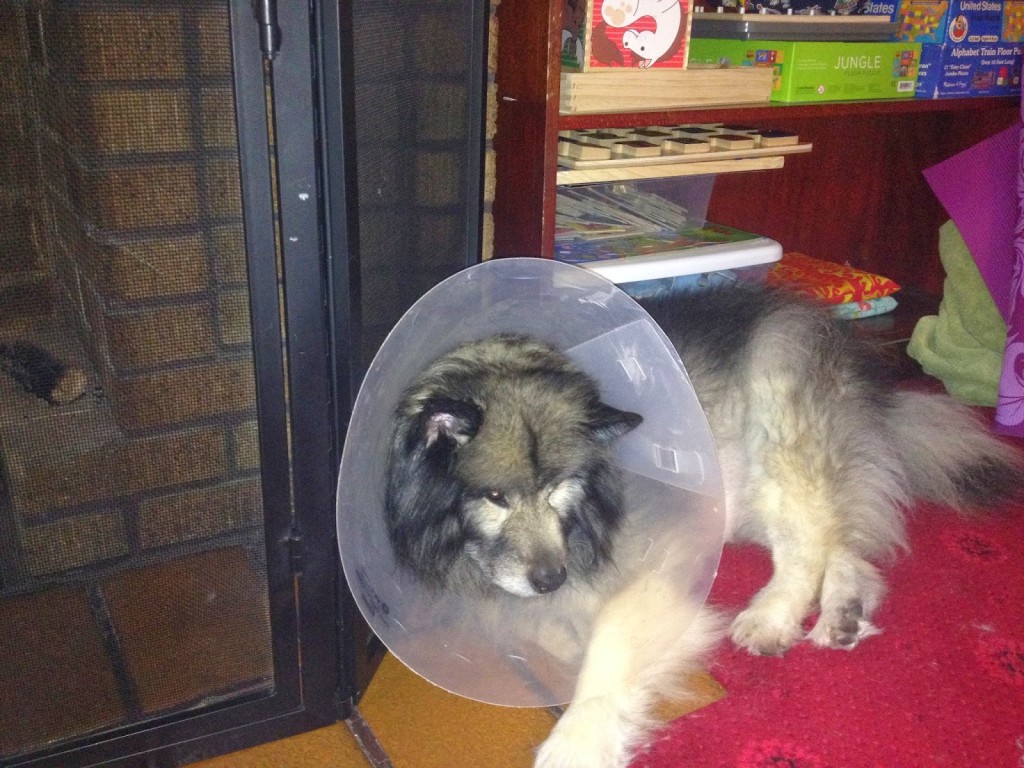
2014 Waynesboro Veterinary Emergency Services
Impulsiveness. 

My poor dog had to have emergency surgery to remove four hair ties, a big wad of hair and the remnants of a plastic jar lid. See the above photo for the evidence of his indiscriminate eating. I’m am sure that eating these things seemed like a good idea at the time.

 Impulsive behavior has created some spectacular complications in my life, think emergency room visits, raised eyebrows, and yellow cards at parties. I am very fortunate to have an understanding partner, but many times I have given her cause to question my sanity, and her own.

Impulsiveness

Just moved into a house? Still unpacking boxes?  This old stove doesn’t work, I’m just going to rip it out right now, and build a cabinet in that space.  Wife due any day with twins? This hallway needs to be painted.  House guest? No time like the present to strip the bathroom wallpaper.  Waiting for a date, talking with her mother, see a mouse running across the floor, why not jump off the couch and catch it your BARE hands? All these stories are true.

How do I deal with my impulsiveness? Let just say that I’m much better than I used to be at controlling impulses, but I still struggle.  I also promised my partner not to start any home improvement projects without talking to her BEFORE I start.  The twins slow me down a bit, however, they dislike wallpaper as much as I do and have started their own projects!

My impulses are not limited to home improvement projects and catching critters.  Often I am gripped by impulses to start new writing projects in the middle of current writing projects.  My spiral notebook helps, giving me a place to write down my ideas for new projects. I also use word counts and timers to deal with my impulses to begin new writing projects.
 I treat starting new projects as a reward. If I meet my word count for the day on the current project, then I am allowed to start the other project.  The other strategy that I employ is the use of timers. I let myself write for a specific time on the new project before I go back to the one in progress. This works well for me. It might work for you. If you struggle with impulsiveness what do you use? Please share!

Impulsiveness.
 The source of many stories but the bane of writing them down. 
Izzy recovering

Focus and Risk

JeDokGeom  2014

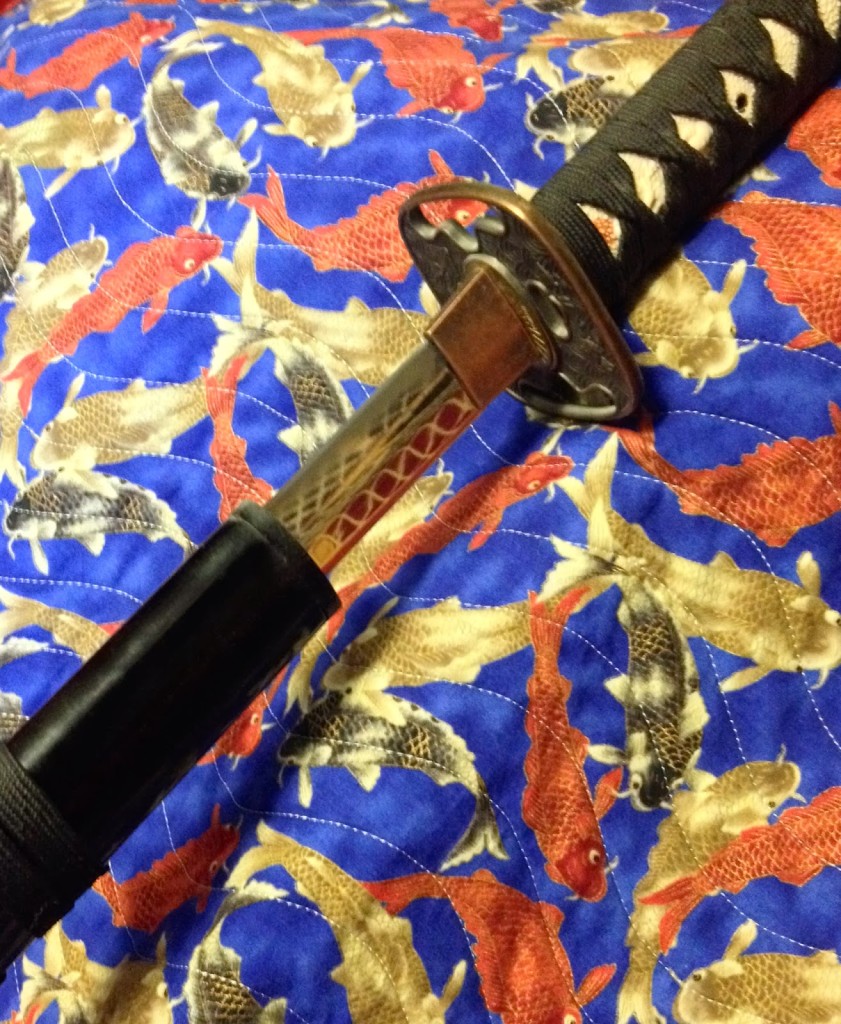
This is a sword. Not just any sword, it is my sword, a sword that I spent four years learning how to use.  And yes, it is sharp.  What the hell does this have to do with focus you ask?

 When practicing Geom Beop, in order to not injure yourself, and others around you, and by injure I mean a visit to the emergency room kind of injure, you have to focus. Nothing makes me focus like the risk of a bad outcome.  I work in a high-stakes environment. If I loose focus someone could be injured, or die. There are no do-overs in nursing.  Again, what does this have to do with writing? Writing requires focus.

Focus is one of the most difficult issues for people with ADD/ADHD. We have the ability to hyper-focus.  When we are hyper-focused, hours can evaporate as we immerse ourselves in a project. On those days I am always surprised when my phone alarms to remind me to pick up the kids.

Other days I sit down at my desk, all fired up to write, a bird will fly by, the frost has made an interesting and beautiful pattern on my window, 

March 2014

and then it is time to pick up the kids. Just like, that my two hours and forty-five minutes to write without the distraction that comes with three year old twins is gone.  

 I made a promise to myself to not let my issues with attention, organization, and hyperactivity derail my writing projects. In order to make myself focus enough to get coherent thoughts on paper, and not waste my time, I have to remember the risks.

The risk that someone will disagree with what I have written and accuse me of being an imposter / hack/ fraud, the risk that I might offend people, the risk that my family and friends will be unhappy / embarrassed / hate what I have written, the risk of rejection. I have to embrace the risk that I may be disappointed and frustrated by my failure to keep my promise to myself.

When I feel myself losing focus, I take a deep breath, acknowledge the risks, remember my promise, and treat it with as much respect as a sharp blade.

 Make promises to yourself. Embrace your risks. Write.

Taming the Monkey

Hanuman / Sun Wukong

What thoughts pull at your mind like crazed Capuchin monkeys interrupting your focus?  Are they to dos? Should dos? Want to dos? Have to dos? 

Finding a way to keep you life together is challenging for those of us that deal with attention issues, flights of ideas and the intense urge to be busy doing something.  Even if you don’t have organic distraction issues, information overload, and multiple demands can distract and overwhelm the most even-keeled person.  

 In order to calm my mind, so that I can focus and write, without the thought-monkeys pulling at my sleeve, I use a three part system. It may work for your thought-monkeys too.

1.  I use Todoist (http://todoist.com) This is a free to do list app that will sync across your devices. I use this to keep track of all the little tasks that can distract me knowing that they have to be done.  I enter my daily, weekly, and monthly, semi-annual, and annual tasks.  I set the application for sounds and visual reminders.   

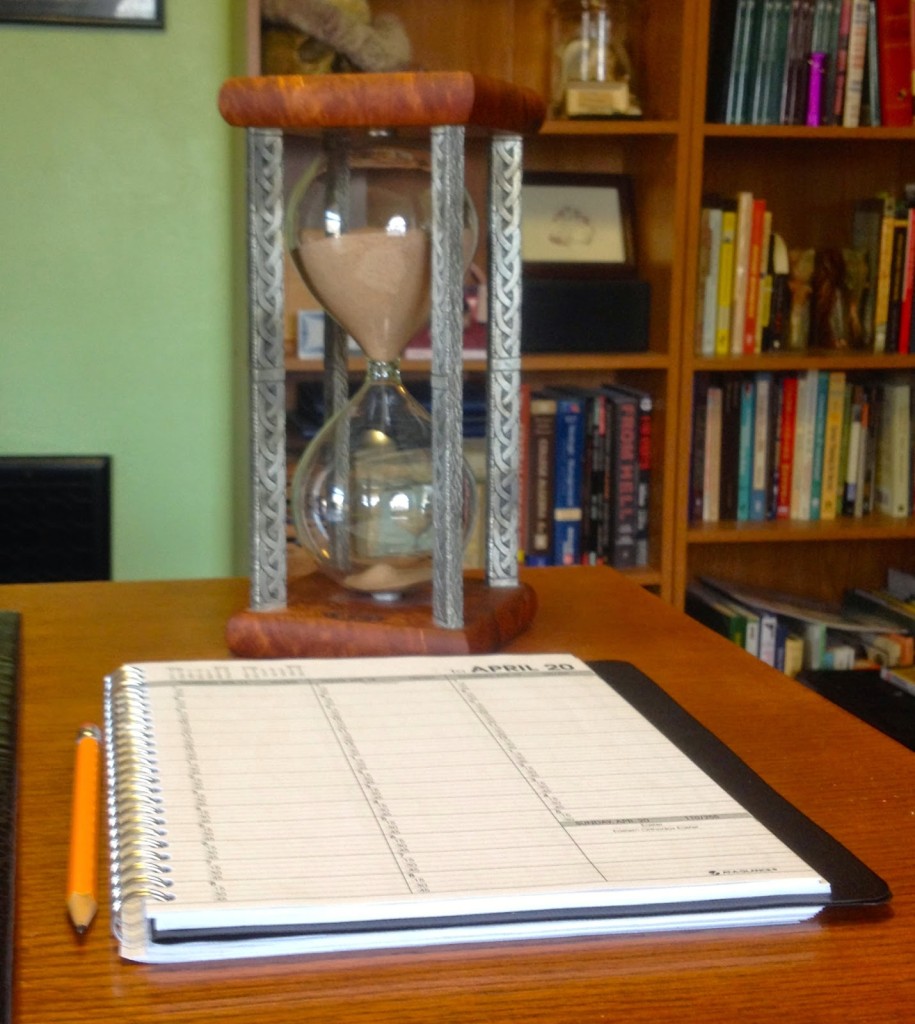
2.  I use a vertical weekly paper planner. I know it sounds archaic to those of you who are in love with your electronic calendars. After trying to use several different electronic planners, I understand that my brain can not visualize and process electronic calendars.  I also use my planner as a work log and diary of my time.  When I feel as if I have not accomplished anything flipping back through my planner reminds me of what I have accomplished and what is possible.  For those of you that have a business, planners can be used to as supportive documentation if you ever face a tax audit.

3.  I keep up with entries! Yes, I stop when I get when a reminder notice, email invitation, or think of something that I want, or need to do, and make an entry in the system. That postcard reminding me that the dog needs a check up?  I set a date to make the appointment. If the office is open,  I call right then and make the appointment. 

 Do I fall off the keeping up with things wagon. Yes, more often than I would like to admit. So what do I do?  A brain dump.  I grab my spiral notebook and make a list of everything that needs to be done, scheduled, etc. I don’t try and assign the items any kind of priority, I just get them out of my head. When I can’t think of anything else, I go back through the list with my planner and Todist open I enter dates in my calendar and set reminders in Todoist.  

Is this redundant? Is it really that hard to keep track of my life? Yes. Distraction issues, impulsiveness, and hyperactivity are a wicked combination.   Using this system helps me focus. I don’t worry that I am going to forget to pick up the kids, or the milk or put out the trash.   When I sit down to write I am not worried that I should/need to be doing anything else but writing. What system do you use? Do you have a system?

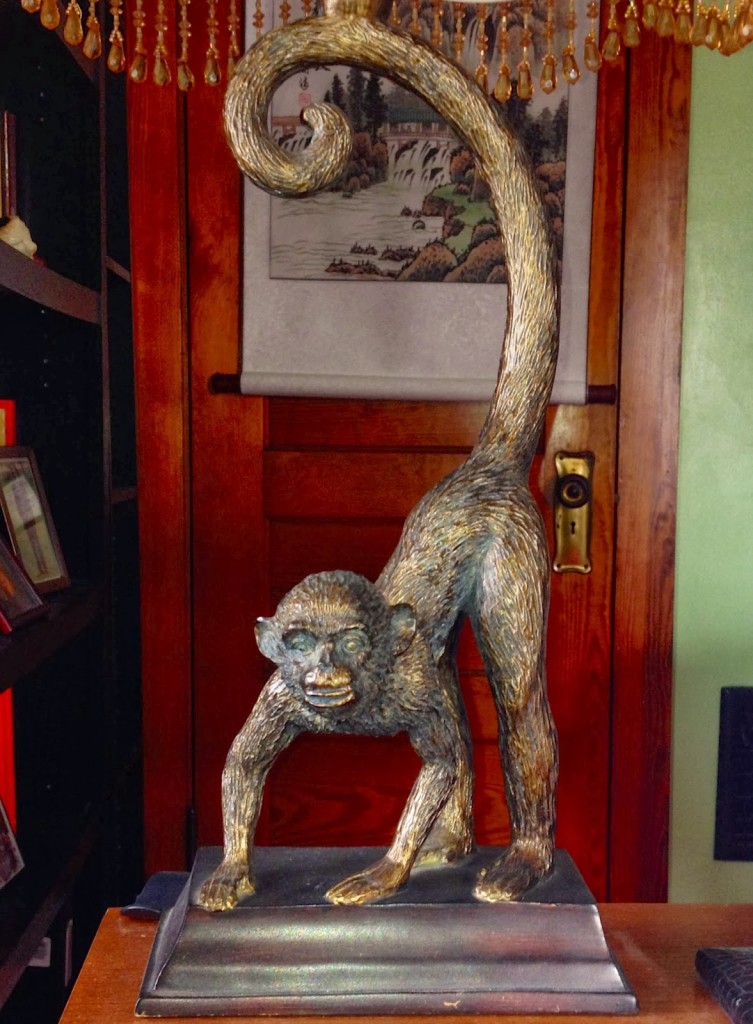
My desk monkey reminds me that I the only thing I should be doing is writing.

Help- My Brain is Full!

Koi Pond National Arboretum 2011

My brain is full. I don’t think that I am only one with a full brain. I think that most of us live like this now, whether we have organic distraction issues or not. My brain feels like the fish in the video, snapping up everything, and anything.

The world is full of shiny objects, any and all of them can trigger a desire to write a story. The young girl at the library focused on her cell phone, ignoring the eight-month old at her feet?  That is a story. The note I found in the park “I spank you car please to call may (sic)” with a phone number?  The two old dudes arguing loudly over a woman in the library?  Yep- all stories waiting to be told.

I pick up objects, print out news stories, take pictures, and collect dialogue like a pack-rat on cocaine. As a kid it drove my mom crazy. What the heck do I do with all these bits and pieces of inspiration and observations?

 I talked before about my first love- spiral notebooks. But spiral notebooks can be awkward to carry around, so when I leave the house my spiral notebook stays home.  When I am out and about I use Evernote (http://evernote.com).
Evernote is an amazing application that lets you save everything, an endless spiral notebook for your phone.  If you are not using it, you should be, and they don’t pay me to say that. Using Evernote I can take pictures, record sounds, type, or dictate a note about what I have seen or heard.

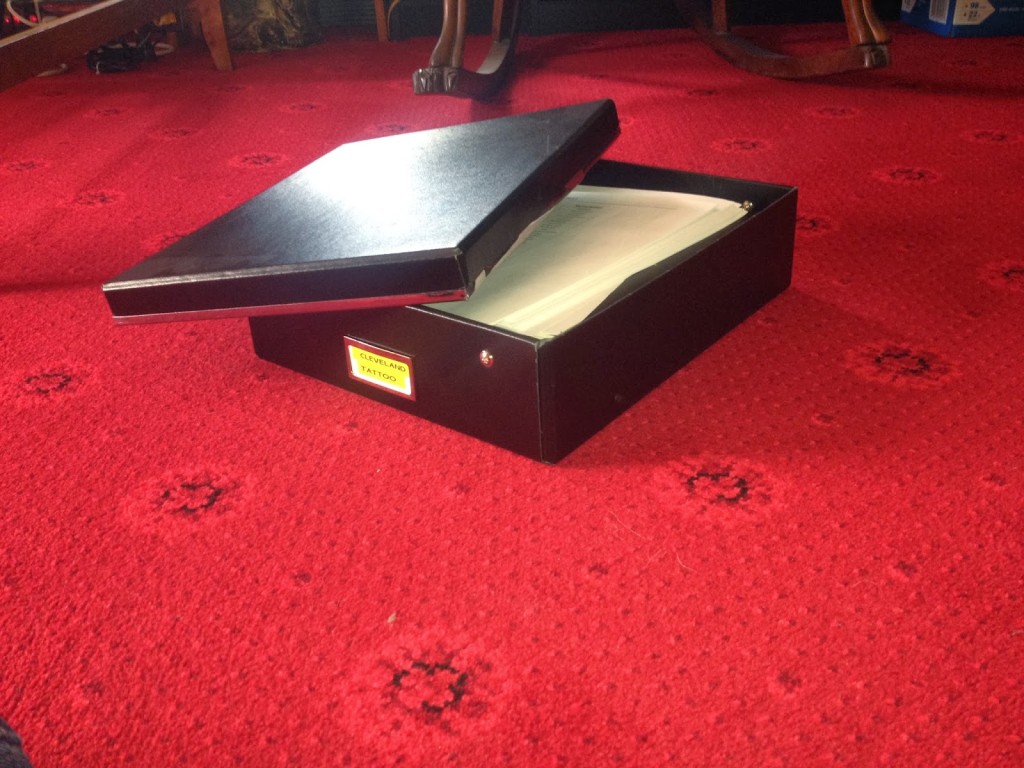
So how do I sort these images, clips,  random thoughts, observations, scraps, and whims?  First, I use letter size flat box files. Like this:

Letter size flat file boxes are not expensive, they can be labeled pretty easily, and stack on shelves. They are available in different colors so if you wanted to organize by color you could. They are portable. Each novel gets a separate box. Short Stories and Ideas for Future Works each have a box.

When I have things that are too big to photograph like maps, old postcards, prints, programs, or more tactile souvenirs from research trips, I stash them in the project box. When I am working on a project, I can pull it down and go through what I have tucked away. I print out photos from research trips and print them on contact sheets.
Sorting through the box lets me immerse myself in the details of my story, reminds me why I wanted to write it, and grounds me when I feel like the words are just there, fluttering out of reach.

Will I ever live long enough to tell all these stories?
I really hope I do. But if for some reason I don’t live to 120, when they go through my things, and find all the random stuff I have picked up and taken pictures of, at least now they will know why.

 Be a kid again. Pick things up. Write a story.