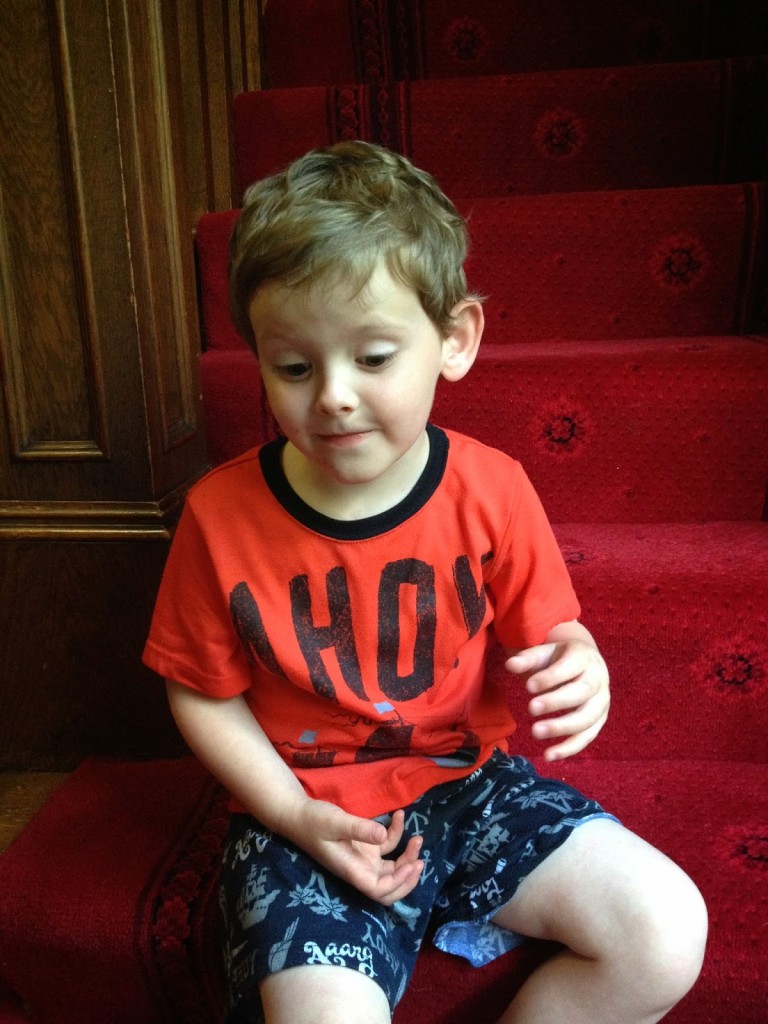
Adventures and Knowledge

My kids love adventures. They don’t care if it is just around the block, they see everything as an adventure.  They ask me more questions in a half hour walk than most people ask in year.  As exhausting as it can be at times, it is a great reminder, and good advice for all of us. Never stop asking questions. Keep adventuring. Learn as much as you can about everything, observe, catalog, read, pick things up, and enjoy having knowledge for the sake of knowing.

Money for the Distracted: Getting Off the Paycheck to Paycheck Merry-Go-Round

The paycheck to paycheck merry-go-round is a soul sucking ride that leaves most people feeling like this when it comes to their money.
So, how to get off? The B word. That’s right a budget, spending plan, or what ever you want to call it that does not give you  hives. A plan for your money, so you can see where it goes. Before you stop reading know that I understand that accidents, unexpected illness, medical emergencies, veterinary emergencies, and other acts of nature can shoot the best made budget out of the sky. How do you try to get out of a deep hole of debt? Here are seven tips to get started:
1. Stop. Just stop and gather all of your financial documents in one place. Figure out where you are. The library is full of books that will show you how to budget. Turn off the TV, shut down Facebook or Twitter, get off Pinterest and take an evening and sit down with your partner and lay it all out. Do it together. If you are worried about having the conversation or talking about money with your partner, read my post here for tips on how to talk about money.
2. Commitment to improving your financial situation.  Forgetfulness, procrastination, impulse spending, late payments, and general inattention cause problems with money management. Folks with ADHD/ADD struggle with all of the above. I once found a tax return that I was supposed to mail in my raincoat pocket two years after I was supposed to mail it. Why? Because in the two block walk to the post office on my way to work, I forgot to mail the tax return. Set up systems to help you keep your commitment and remember important financial dates.
3. Understand that there is a difference between being underwater because of poor money management, and catastrophic / unplanned life events. Do not see your situation as a symptom of poor character development.
4. Spending to save money is not saving at all. Too many people have bought into the whole coupons-stockpiling madness. Having thousands of dollars of food and household products in storage that rot before you use them is a waste of time and money. Yes, you can save money by stocking up when things are on sale and you have a coupon but only buy what you need/will eat, and enough to last until the next sale.
5. Figure out if you have an outgo or income problem. Do you not make enough to cover your basic expenses? If you can not afford food, housing, utilities, transportation, and medication costs on your income you have an income problem. Do you spend more than you make on non-essentials? That is an outgo problem.  No blaming here, just figure out what you need to work on, or if you need to work on both.
6. Take advantage of free resources to get help. The library is a great place to start. There are many free on line money management tools also. Check them out. Mint is a great place to start, and no they do not pay me to say that.
7. Getting out of debt is like losing weight, we all know that we should, how is the problem. Everyone needs to find ways that work for them, there is no one way. The keys for ADD/ADHD individuals is that the system needs to be simple, easy to remember, and automated as much as possible. Complicated systems that require large investments of time will be difficult for most people but for those of us with the attention span of a goldfish they are impossible.
Find a way to start your journey towards a place of calmness with your money. Financial stress can kill relationships and contribute to depression. Start where you are, be kind yourself, and believe that you can get off the merry-go-round.

A Reminder: Slow Down


I am traveling this week with my family, and decided to re-run this post about taking time to slow down. It is from last October when during a pretty chaotic time.  The winter proved to be just as chaotic and stressful.  If you did not get a chance to read it then here it is:

Taking the Time to Slow Down

Spring! Ohio style.
I will be back next week with a brand new post.

Staying Focused Awash in Grief.

Over the last three months I have struggled with focus. Why? Grief.  In the last twelve weeks there have been eight deaths that have directly, or indirectly touched me. The last time I lost this many people, this close together, was in the middle of the AIDs epidemic.

Grief is difficult for everyone. For individuals with ADHD, it it compounded by behavioral issues. I wrote about keeping it together when a family member faces a health crises here.  Some of the same issues complicate grief for individuals with ADD/ADHD, impulse control, issues with substance abuse, the inability to be still, discomfort in your own skin, and an increased incidence of depression and suicide.

My tips for handling grief can be summed up in a few sentences.

1. Do not self-medicate. I am talking about the urge to binge watch/spend money/shop/drink/smoke/eat chocolate/ whatever your make-me-forget-not-feel drug of choice is, don’t do it. Feel your feelings no matter how uncomfortable they are.

2. Pay attention. Being sad is normal. Not getting out of bed for days is not. Get help.

3. Find someone to talk to about your feelings. A therapist, social worker, clergy, your best friend, your family.

4. If you are a creative, create. Do the thing that feeds your soul.

5. Give yourself time. So many times we think that we should be able to “just get over” whatever it is that is making us sad. A very wise woman once told me “some things you don’t get over, you just get through.”

6. Find a peaceful view. Just sit with it. This is mine.

Please give yourself time to heal.

If you are struggling with depression, please, please, get help, don’t make a decision in a moment that is permanent. This link is for the National Suicide Prevention Organization their number 24/7/365 is 1-800-273-8255.

A Year of Woman’s Voices: Jam on the Vine by LaShonda Barnett

LaShonda Barnett’s Jam on the Vine is the first post in the 2015 A Year of Women’s Voices series. I have loved reading historical fiction for a long as I can remember and Jam on the Vine is one of the first I have read in a long time that made me me want to read it again as soon as I had finished it. This novel features a strong story with great character development, a believable weaving of fact and fiction, and romance. I am forever grateful to Fiona Zedde for recommending this book.

Barnett’s novel follows Ivoe Willams as she grows from a girl voraciously reading purloined newspapers to a woman pushed to risk her life publishing her own newspaper to address horrific abuses and racial injustices of the early 20th century. Interwoven in Ivoe’s story is the story of her family and her lover. Ivoe’s comfort with her sexuality is refreshing, and while a part of her story it is not the whole story. After an unfortunate encounter with an ex-lover, with doors slammed in her face because of her race and gender, Ivoe decides to make a way when there is no way.

Barnett’s writing is crisp, lyrical, and evocative. If someone were to ask me for a work that would help them to understand inhumanity of the Jim Crow south, the beginning of mass incarceration, horrors of the summer of 1919 and race riots in northern cities I would hand them this book. Although this is a work of fiction, it is built on actual events, and the experiences and emotions are true.

As a writer this is what I have learned reading LaShonda Barnett’s Jam on the Vine:

1. Setting is the crucible for character development.

2. The unsaid is as powerful as the blatant and more menacing.

3. Write it real, real emotions are compelling. Don’t gloss over the difficult ones. Jealousy, love, hate, revulsion, lust, and anger are essential for good storytelling.

4. Nothing is a terrifying as human beings behaving inhumanly.

5. Character growth is progressive but change can happen in an instant.

Be warned, this is not a comfortable read, but an anxiety promoting tense tale of one woman’s surviving and thriving during a very harsh and horrific time period of American history. Read this book with your eyes wide open, don’t look away, feel the fear, rejoice in Ivoe’s triumphs, celebrate her victories and passion.

Check out LaShonda Barnett’s website for more information and details about her other works.


Research for Writers: Ten Tips for Location Research


This is the beginning of a series of posts on research for writers. Some writers do a large amount of location research before they start a project, some do research as they go along, others of us may pick up bits and pieces like crazed crows gathering up every little shiny object or fact that catches our eye, add a little ADHD to the mix and location research can become overwhelming.

I fall in to the crazed crow category, and have talked about how I have organized my bits and pieces and ideas using flat files here , and how to make the most of collecting ideas when traveling here. I wrote about how to know when to stop researching and start writing here.

Here are ten tips for being productive when you research locations for your non-fiction, creative non-fiction, novel, short story, screenplay or other creative writing project.

1. Location research does not have to be long distance. Google Earth  has put much of the world just a mouse click or finger swipe away. If you are setting your story in a real place, even if the characters are fictional, readers will take you to task if you are mistaken in your geography.

2. Travel guides are your friends. If you are able to visit a location, take advantage of travel guidebooks. Most libraries carry travel guidebooks.  Lonely Planet travel guides are my favorite and no they don’t pay me to say that. If you are not able to travel to the location, a guidebook is helpful for researching your setting.  If your work is not contemporary, library sales are an excellent way to find out of print/ older guidebooks and old maps for getting the scenes right.

3. If you are going to travel, plan before you go. Plan, plan, and plan again. I work from a thick outline, and make notes to myself in the margins about research, that needs to be completed for the story. Using my notes, I create a list of places to visit, things to experience, and people I would like to interview.

4. Borrowing from the film and photography industry make a shot list.  For photographers and film makers a shot list is a list of photographs to take or scenes to film.  I use photos for much of my research because I am a visual organizer. If you are not into taking photos this is simple a list of places or events you want to visit or observe. Some writers sketch locations if photographs are inappropriate for the location or event.

5. Local guides can be invaluable if you have limited time.  Members of historical societies, hiking groups, amateur photography clubs, and/or friends of friends can be more than willing to answer questions, point out the best places for photos, accompany you to events, or provide history and details that only locals know. Be respectful of their time, offer to pay for fuel or food or both if they take you on a tour that involves motorized transportation. A thank you card is always appreciated.

6. Be respectful of local culture. Dress appropriately, this is another instance where local guides can be helpful. People should never be treated like animals in the zoo. Always ask permission if you wish to photograph people, and respect their answer if it is no. Most people will answer polite questions. If they ask why you want to know, be truthful. Many people will be happy to answer respectfully presented questions, and if not, move on.

7. Journal your experiences, even if you don’t normally keep a journal. Find a way to record your impressions, feelings, tastes, sounds, and what you see. All of this can be used, if not for a current project for a later one.

9. Push your limits, try new things, but be safe. Pay attention to your surroundings. Leave an itinerary if you are traveling alone. Listen to your gut, if something does not feel right if most likely is not safe.

10. Travel light, keep your gear simple, and have a back up plan if the location/event you planned to visit is not available.

Don’t be afraid of location research, use these tips, make your trip productive and most of all have fun.


 

How to Talk about Money: Ten Tips for Calm Conversation

Talking about money is one of the most difficult conversations that couples have. Statistics indicate that money problems are a primary reason for divorce. I have talked about the issues that make it difficult for ADHD individuals to manage their money here and here. Trying to explain to your partner some wacky impulse purchase that made total sense at the time is a set up for bad feelings, accusations, and disagreements.

Talking about how to spend money can be fraught with judgement, and if one partner has a higher income the conversation can be very uncomfortable. If you are going to survive as a couple, you have to find a way to talk about your money, how to spend it, what to save for, and how to handle debt. This is important even if you keep your money separately. Here are my top ten tips for a constructive money conversation.

1. Have the conversation in a neutral environment where each of you feels safe. Ideally the environment will not include children if you have them. You want to be able to focus and really hear each other.

2. Listen! Listen to each other without judgement. Listen, without forming your response in your head. The moment you start thinking of your answer/rebuttal you stop hearing what the other person is saying.

3. Keep the discussion in “I” phrases. For example : “I am worried that we are not saving enough to retire.” Do not blame. It is pointless. Remember that no one is a bad person because they have poor money management skills and focus on the now, not the past.

4. Bring all the numbers with you. Make a list of everything you owe and all your resources so that your are not talking about nebulous numbers. This is most important if one of you is the only one who pays bills and handles the banking.

5. There are always options. This is important to remember, as if your money problems are severe you might get stuck in a rut thinking there is no way out. There are plenty of options to research, but starting with debt settlement is a good idea. Research either on your own or as a couple depending on how conversations are going.

6. If impulse spending is the root cause of your problems, create cooling off mechanisms and spending agreements. For example: No one spends more than $100.00 on non-food items without discussing it with the other person first.

7. Agree to have regular meetings to discuss your money. Yelling at each other as you pass in the kitchen does not count.

8. If you find that no matter what you can not have a civil discussion about money, you may need to involve an outside party. This could be clergy, an accountant, or similar, non-family, neutral party. It is essential to have an individual present to help facilitate the discussion who is not invested in how you spend your money.

9. Remember to breathe. We do not come into this world automatically knowing how to manage money. It is a process. Take advantage of resources, many of them free, that are available to learn how to manage your money. Learn together.

10. The best way to start any money meeting is to remember why you became partners/spouses in the first place.


When it All Feels Like Too Much

My brain feels like this.

I often feel like this in February. The thrill of the New Year is over. It is usually so dang cold that going outside even for a few minutes feels overwhelming.  It is the time of year  when I start to question my ability to get it all done.

This is when it is time to step back, take a minute and remember the why of my goals. If you missed my post on setting goals, you can read it here .  Are you feeling the same way? Statistics suggest that at least half of the people that make New Year’s resolutions or goals abandon them after eight weeks.

Here are five tips to get back on track when you fall off the goal wagon:

1. Do one thing each day towards your most important goal. It does not have to be a huge thing, just do one small thing. Write one sentence if that is all you can manage, but do it. Set a timer for ten minutes and do as much as you can in ten minutes. If you are in a grove, set it for another ten minutes. The hardest part of momentum is getting started.

2. Get inspired again. Pick a theme song or make a play-list for working on specific goals. The play-list becomes your cue to get to work. I talk about the role of music in creating a habit of work in this post ,  and the prolific writer Megan Hart talks about the role music plays in her work habits here.  Make that play-list or pick the theme song. It will signal your brain that it is time to work.

3. Get off Social Media. You heard me. Take a break. Set limits. Do not compare your life/ achievements/ publishing record/ accomplishments to other people’s carefully curated life.

4. Review your goal plan. Do you need to rethink and re-plan? Has your life changed? Is the goal not important anymore?  Do you want to accomplish something else? Do not be afraid to abandon a goal if your life has changed dramatically. A new job, illness, birth, death, relocation, financial status changes may mean that you need to reexamine your goals and make a new plan.

5. Be gentle with yourself. Feel your feels, then get back on the bus and get going toward your goals.

When you are feeling overwhelmed, sad, frustrated, or confused : Jump into whatever creative thing feeds you with both feet.