
Thirteen for Halloween

Dark Secrets BIG

Halloween is the ultimate holiday for those of us who relish having the bejesus scared out of us. For everyone who loves the creepy, the gory, the freak show, the weird, and just plain scary this is our time. We delight in the month of pumpkin spiced everything to the core of our adrenalin soaked souls. In celebration of my favorite time of year, I have a list of thirteen reads for Halloween. So take a break from visiting haunted houses and treat yourself to these thirteen dark reads.

  1. Dark Secrets: A Paranormal Noir Anthology,  Rachel Caine, Cynthia Eden, Megan Hart, Suzanne Johnson, Jeffe Kennedy, Mina Khan. This is a marvelous anthology of paranormal noir romance. It is all here, ghost stories, dark fey, vampires, tormented djinn, murder, mayhem, and death. Hell, the devil himself appears in these pages. This anthology is a Halloween bag full of all your favorite reading time treats. It is hard to resist the sexy bite sized story morsels that beg you to read just one more.
  2. White is for Witching, Helen Oyeyemi. A creepy house, and a history of unfulfilled hunger passed down through generations, this book will have you swearing off of bed and breakfast accommodations.
  3. Boy Snow Bird, Helen Oyeymi’s lyrical and viscerally terrifying novel that turns Snow White upside down and sideways. I enjoyed this book so much I immediately read every thing else that Helen Otoyemi has written, so be warned.
  4. Family Dinner: A Tale of the Undead, Mark C. Scioneaux.  A family love zombie story with the best twist ending I have read in years..
  5. The Resurrected Compendium, Megan Hart. A collection of terrifying, angry stories of the undead that dove tail into each other. These stories were originally released individually but are now collected into this gore fest of a compendium. The undead in these stories are not mindless slow walking killers. They are resurrected, pissed off, and they want what they want.
  6. Apparition, Michealbrent Collings. A novel that creeped me out so bad I had to read it in small bits. It does for cockroaches what Steven King did for clowns. Read it in a well-lit room in the company of others.
  7. Every Dark Desire and the sequel Desire before Dawn,  Fiona Zedde. Yes, I know this is two books and it messes up the count, but damn these feature fierce vampires done right. Bloody, violent, and sexy as hell, these vamps will have you on your knees, baring your throat, begging for a nip.
  8. The Vines, Christopher Rice. Settle in for some southern discomfort as Rice spins this scary tale featuring family secrets, killer vines, and a hell of a twisty ending.
  9. The Headmaster, Tiffany Reisz.  A fun, not so scary ghostly love story in the best tradition of weird tales. The banter and dialog make this a must read.
  10. American Psycho, Bret Easton Ellis. Disturbing, darkly funny, and violent. What’s not to love about this book? If you are late to the party for this book, do yourself a favor and read it.
  11. Dawn- Book one Xenogenesis series, Octavia Butler. There are rumors that this will be coming to television and as a huge fan of the late Octavia Butler, I hope and pray that they do not screw it up. Dawn is a dark futuristic tale that reminds us that in the universe, survival has a price, and rescues can be expensive in more ways than one.
  12. Scary Stories to Read after Dark, Alvin Schwartz. Remember all those stories that you used to tell each other at over-nights to guarantee that no one slept, and that everyone was freaked out? This is a fantastic collection of all those tales, written down so that you don’t have to try to remember them. When your kids bug you to tell them a scary story, start them off right and read them one of these. This is best for older (9+) kids. Use your discretion. You know your kids better than anyone else, but be advised if you read this around the bonfire while camping be prepared to have your kids in your tent!
  13. Books of Blood, Clive Barker. No discussion of horror can leave him out. If you have not read this collection of short stories by the master you need to experience these wonderfully horrific tales.

There you have it. So go ahead light the fireplace, grab an adult beverage of your choice and settle in with any one of these books to enjoy the mayhem.


BLM_4028


Rebalancing Act

IMG_2018

Rebalancing. The act of trying to stay on top of your commitments to yourself and others when your schedule changes. I have written before about why it is so hard for ADD/ADHD individuals to change their routines here. As a parent with ADD/ADHD it is hard enough keeping my own schedule together, let alone the little people in my house. We started using checklists for the kids so that they can help getting us out the door in the morning and into bed at a reasonable time at night. The checklists are working well for them, and after finding myself spinning like the Ferris wheel above trying to get myself out the door one morning I think I need a checklist for me. 

 Balance is really about rebalancing, letting go of what does not work and holding on to what does work. If I don’t take time to examine my schedule and change what is not working, I end up frustrated, and crazed, and not getting anything accomplished. I started out this Fall thinking that I would be able to drop the kids off and head to the pool for a swim workout. I neglected to factor in that there are two aquatic exercise classes for older people scheduled when I planned on swimming, that it resulted in a very crowded locker room, and fewer lanes for lap swimming.

I got so frustrated that I skipped my swimming exercise. After two weeks of blowing off swimming I realized that I just needed to adjust my time. Every exercise recommendation you ever see says to do your exercise first thing in the morning so that you don’t skip it, but for me, the morning is my most creative time, and the pool is too crowded. Instead of just giving up, I tried going after lunch and before I pick up the kids.  It worked, I get my swim time in, I have the locker room to myself, and I am in a better state of mind to deal with after-school-crazy time with my kids.

The willingness to try different ways to accomplish different tasks is key to success for people with ADD/ADHD. Let go of recommendations that do not work for you, and hold on to what works. Exercise really helps me with my focus, but I need to do it when it fits my schedule, not when everyone says you should do it.

This applies to every other task that people have opinions about when and how you should do it. For example almost every book of writing advice ever written advises that you write everyday.  Would that work for me? Nope, after a long shift at my day job I am too burnt out and tired. Write before my shift to get my writing in? Nope, not getting up at four in the morning to put words on paper, although I have stayed up to four in the morning writing when in a groove. What do I do instead of beating myself up about not writing everyday?  I make it count when I do write.  I set goals for word counts. I stick with what works for me.

Two years ago I participated in the madness that is NANOWRIMO (see my post here if you don’t know what NANOWRIMO is) I only had weekdays to write, and only for two hours and forty-five minutes. So I sat down and figured out how many words I had to write each day in that two hours and forty-five minutes to finish.  Did I write everyday? Nope, but I still managed to get fifty thousand words written in twenty days. Find what works and hold on to it, and let go of any advice that does not work for you. Listen to yourself, research, experiment, read and re-balance to find your center.

Be kind to yourself, don’t quit, find what works for you and do it.

IMG_1973

Persistence: Keep On Keeping On

BLM_3928

Persistence and patience are qualities that every writer needs. Persistence so that you can keep going when others do not understand why you do what you do, patience as you send your work out and wait for a reply. Persistence as you continue to write and submit and edit. Patience as you continue to carve out time to write when you have a job/family/other obligations. Persistence to fight for your time to create.

If you are a writer/creative you have to keep writing, even if is only one sentence, keep moving. Some writers struggle with getting words on the page, and I wrote a post about writer’s block and not having time for it, which you can read here.  Making progress and achieving your goals can be achingly slow, and I have written about slow progress here .

As a writer who wants to be published you have to keep writing and submitting your work, you have to keep producing, and you have to keep sending it out there. Why? Because one day you might just get that acceptance letter instead of a rejection, because if you don’t send it out no one will ever read/see/experience your work.

If you are writing and creating just for yourself, with no intention of ever sharing your work with anyone else that is fine, but if you are serious about sharing your work with others you have to be persistent. The flip side of persistence is patience. It is hard to be patient, hard to wait for decisions to be made about your work.
So, what should you do to cope with the time between when you send your work off and hearing back, and how do you cope with rejection if you work is not accepted? Get to work.

Write, create, paint, photograph, throw clay pots, whatever it is that you do creatively, get back to work. Be patient. Be persistent. Keep going.

This week a short story that I wrote was published. It is not the first time I have been published, but this is the first of my fiction that has been published, and that makes it is special. So how did I celebrate? I wrote this piece, and got back to work.

Here is the publisher’s link  for the book. I hope that you check it out, the stories are unique and I am very happy to have my work included in this anthology.

Here is the link to Cheyenne Blue’s site for more information and tantalizing bits about the writers included in the this anthology http://www.cheyenneblue.com/


Here is the Amazon link for the book


ADHD and Resistance: Five Steps for Overcoming Resistance

DSC_0462

Resistance is different than procrastination, but often they are linked.  Why do we put off projects, activities, phone calls, meetings, purchases, cleaning, laundry, exercise and a million other to-dos that will make our live easier, more organized and less stressful? Resistance. For individuals with ADD/ADHD what looks like procrastination is often linked to resistance. We may be discomforted by some aspect of the task, or have had poor experiences that we don’t want to repeat. Sometimes resistance for ADD/ADHD individuals is linked to sensory issues that are associated with the task, or past frustrations with tasks. Figuring out what you are resisting is one way to end procrastination and move forward.  Resistance can create very serious physical problems, particularly when it comes to things like health checkups and screenings, dental care, exercise, and self-care. 

Here are five tips to help you get past resistance.

  1. Step back from criticizing yourself about not doing whatever it is you are not doing. Ask yourself “why am I avoiding this task/event/work?” Make a list of the reasons for your avoidance, in a non-judgmental way. Do not discount any reason that occurs to you, no matter how trivial the reason seems. Be honest. Remember that there always has to be a reason: “I just don’t feel like it” is not a reason, there is always a deeper reason. Sensory sensitivities, a major component of ADD/ADHD are often at the root of resistance. Sounds, smells, and sensory overload associated with tasks and events can trigger resistance and procrastination. 
  1. Look at the list from step one. Ask yourself “What can I fix?” Be realistic here, if that six in the morning spin class is not working because it is too early, find a later one. If you can fix the issues, fix them. Is the mega-grocery store overwhelming? Find a smaller store or shop on-line. Be creative.
  1. Pay attention to the seasons in your life. Are you dealing with aging parents, young children, teens, transitions, health issues, etc. ? Maybe now is the time to drop activities that do not fit. Often resistance is your mind/body telling you that now is not the time for an activity. Be careful here. Do not stop self-care activities like exercise and time for creative acts. Stop doing things that are not contributing to your well-being. Learn to say no to things that do not feed your soul.
  1. If the task is something you can’t let go of, like laundry, bills, or cleaning.  Can someone else do the task for you? If you can afford it pay someone to do the tasks you hate. If you are in relationship consider working together, and each of you do the task the other hates, or do the tasks together so they don’t take as long. Sometimes resistance is really resentment masquerading as resistance. 
  1.  Do not be afraid to experiment. Resistance to change for ADD/ADHD individuals has much to do with our need for routine which I wrote about here.  If you are still resistant, start again with step one, it often takes time to get to the real reason for resistance.  

I hope these tips help. The next time you find yourself resisting, take the time to figure out why. It can make a very big difference in your mental and physical health. 

BLM_2244


Preflight Checklists_ Not Just for Pilots

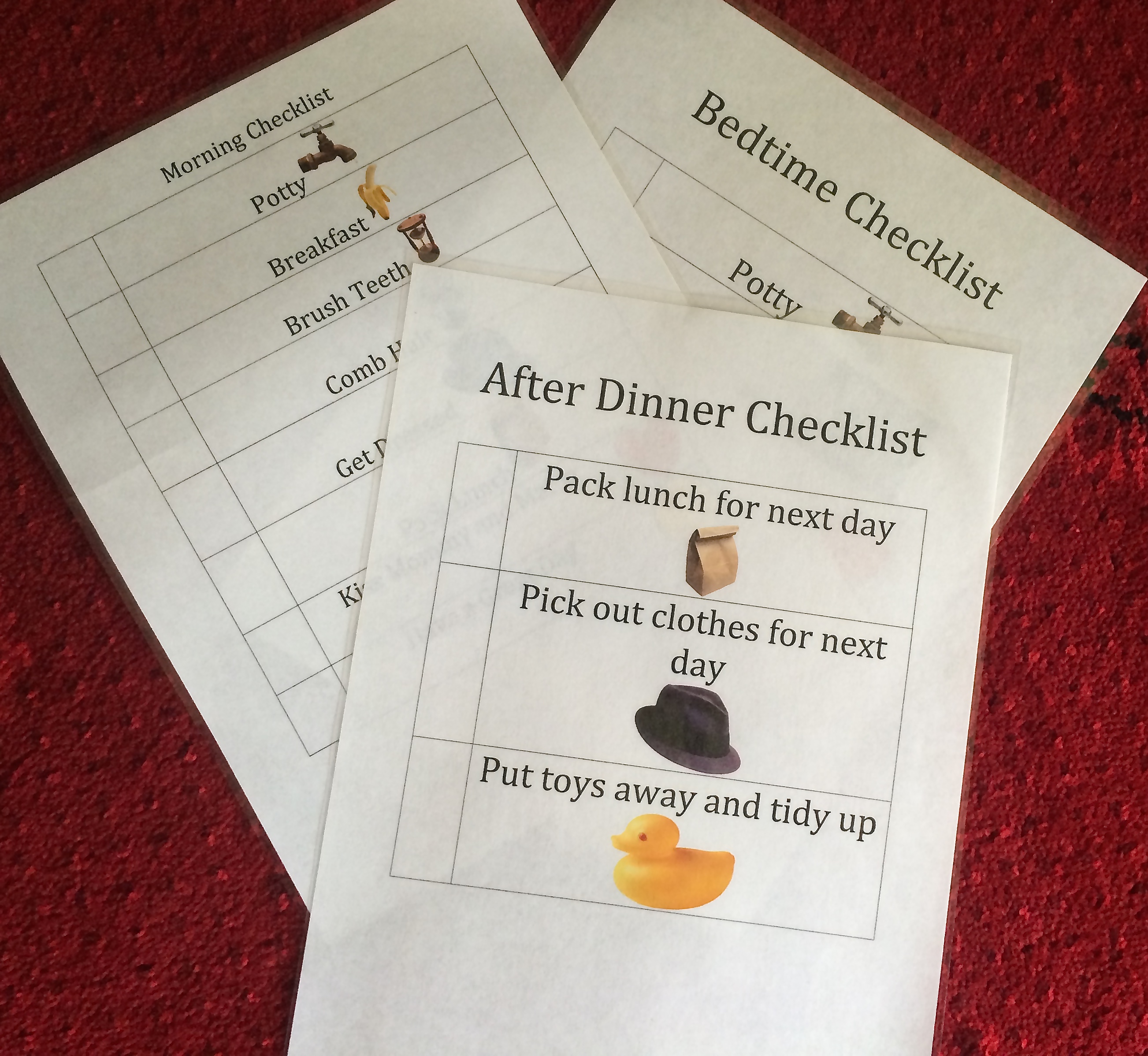
BLM_1688Checklists are very simple time management, and organizational tools. Pilots have used preflight checklists for years, as a means to ensure that everything that needs to be done before take off is complete. Most medical facilities have incorporated checklists for safety in operating rooms, prior to procedures. As a mom with ADHD, getting my kids and myself out the door for school and work in the morning can feel overwhelming. I wrote about this last year in this POST. In that post I talked about creating morning checklists for yourself to help organize your mornings. Checklists are an easy way for adults and children to overcome the difficulties with organization and distraction that individuals with ADD/ADHD battle every day.This year the kids want to manage their own checklists. As they are just starting to read, I added visual clues to the checklists to help them and laminated them so that they can use dry erase makers and reuse them. Our mornings are not effortlessly organized, but they are a heck of a lot better than they are without the checklists. Checklists can help both adults and children feel more in control, and relieve the anxiety that can accompany ADD/ADHD that occurs from the chronic worry that we are forgetting something important. “But what if I lose the checklist?” I hear you saying, and prior to finding an application for my phone, my checklists were on scrap paper, and I would loose or misplace them and create more stress for myself as I ransacked my house or desk trying to find them. Trello (HTTPS://TRELLO.COM) is an application makes it easy to create note cards and checklists.  The best part is that it is free, and no, they do not pay me to recommend this app. Unless you are using it for your business the free version is powerful enough to use for most people.  Checking a list electronically lacks the joy that comes from scratching through a paper checklist but the benefit of not loosing my checklists has me hooked.Analog or virtual, checklists can be powerful weapons against forgotten items and tasks, try them and see if they make a difference in your life.

 IMG_1904

Devil Thy Name is Procrastination: Seven Tips for Getting Stuff Done

IMG_0453

Did you procrastinate paying bills and get hit with late fees and bank charges?  Did you put off getting the oil changed and now the repair bill is thousands of dollars because the engine is blown? Did you wait until the last minute the report was due to write it and miss the deadline and now the opportunity for career advancement  is blown and you might lose your job? The root of all these terrible events is not bad luck it is procrastination.

Procrastination is a way of life for many individuals with ADD/ADHD. Overwhelmed by details and the noise in our heads, distracted by every little thing, and haunted by memories of impulsive decisions, we often put off doing what we need to do, and wind up forced into last minute decision making, bad choices, and the negative fall out.

Let me be clear, there is a difference between procrastination and forgetting to do things because you lose track of deadlines and details. I talk here , and here about using planners and timers for time management. I am talking about knowing that you have to do something that must be done and putting it off. Missing deadlines, appointments, not doing what you said or promised to do, damages your career, relationships with family and friends and can have catastrophic financial effects. Trust is built on keeping promises and commitments, repetitively missing commitments, and failing to complete tasks destroys trust.

Some people think that they work better under the pressure of a deadline. Research does not support this,  and others judge procrastinators, labeling them as lazy. Most often people who chronically procrastinate are most often overwhelmed, are fearful of making a bad decision, and are paralyzed with fear. There are also chronic procrastinators that are perfectionists who rework a project to death and never finish it, leaving others to think that they are incompetent and lazy. If any of the above situations resonate with you, try these seven tips for over coming procrastination.

  1. Time yourself doing tasks. Many individuals with ADD/ADHD have a distorted sense of time, making them afraid to start a task because they believe it will take too long. Knowing how long a task actually takes to complete enables you to make good use of your time.
  1. Make yourself accountable. Make a schedule and set up reminders on your phone. Enlist friends/family to make yourself accountable. Accountability partners should not nag, but check in regularly.
  1. Shut down your social networks. Have specific times and limit the amount of time you check into your social networks. It is estimated that most people spend two hours per day on social media. Two hours could translate into more than enough time to accomplish tasks you have been putting off because of lack of time.
  1. Make a list of every single thing you need to do and with deadlines. Don’t judge the items just list them. Take your time doing it and really do a brain dump. Getting things out of your head will help you to not feel so overwhelmed. Next to each thing write down the time you think it will take to do it, be realistic (see step one). Now decide which things really do need to be done, and which can be dropped from the list. Using the deadlines, schedule one task each day to complete. Do the task. Do not over schedule yourself! If you get the task accomplished and want to add another task, add it, but do not try and catch up in a day.
  1. Stop taking on/starting new projects/volunteer work/ extra activates until you compete all your other projects. It always feels good to start a project but finishing feels so much better. Practice saying “I would love to help, but I have too many unfinished projects right now.” Your mileage may vary with this one at your place of employment.
  1. Schedule one hour a day for completing tasks that you hate doing, and just do them. Set a timer and really work for the one hour. Reward yourself when you are done.
  1. Begin. Even if you don’t feel like, even if you are unsure, even if you are afraid of making a mistake, just begin.

Procrastination has such negative effects, do not let it continue to derail your life.  For more about how to get things done in your life and creating a time management plan that is personalized, I recommend this book: Time Management from the Inside Out by Julia Morgenstern

(http://www.juliemorgenstern.com/books/time-management-from-the-inside-out) .

I hope these tips help and as always do the best you can and be kind to yourself.

IMG_0028

Here, There and Everywhere: Ten tips for Traveling with Kids

IMG_1656

We took our kids on their first big road trip this Summer. Three states, another country and back home again. Throw in a family wedding, visits with friends and family along the way and it was the kind of trip you think about and smile. Our kids have been traveling since they were two months old. They are really good at rolling with what ever happens and dealing with things being different than at home. I know that I am fortunate that my kids are like this. As a family we have worked to find ways to travel with them that make it easier for all of us. Here are some tips that I hope help make travel with your kids a little easier.

  1. Pack snacks. Lots and lots of snacks. Our kids say they are hungry as soon as we pull out of the driveway.
  2. Expect to stop, many, many times. You are not going to make your best time traveling with kids, so plan accordingly.
  3. Potty accidents and spills will happen, pack extra clothes that are accessible without having to unpack the entire car.
  4. Let the kids pack an activity bag for the car. The rule in our house it that everything must fit in the bag, and they must be able to pick it up and carry it themselves.
  5. Pack your lunch. This will save you time and money. Find a road side stop with picnic tables, eat and let the kids run.
  6. Check the web for activities related to your travels. The national park service junior ranger program is free, fun, and has age specific activities
  7. If your kids are as freaked out by automatic flush toilets as mine are, use sticky notes to cover the electric eye. Thank you LeeRay Costa for this sanity saving advice.
  8. If you are staying at a hotel, it is worth it to find one with a pool. After all day in the car, the pool is a great way for the kids and adults to get some exercise and have fun. If a hotel is not in your plans find a park or playground near where you are staying and plan on arriving in time to take advantage of it.
  9. Pack something for meals that your kids will always eat and that can be made quickly. For us this is a loaf of bread, peanut butter and jelly. This has saved dealing with hungry/cranky/crazy kids and adults more times than I care to admit.
  10. Breathe. Be kind to yourself, and remember that most things do not go according to plans, relax and have fun along the way.

IMG_1684

IMG_1711BLM_2506